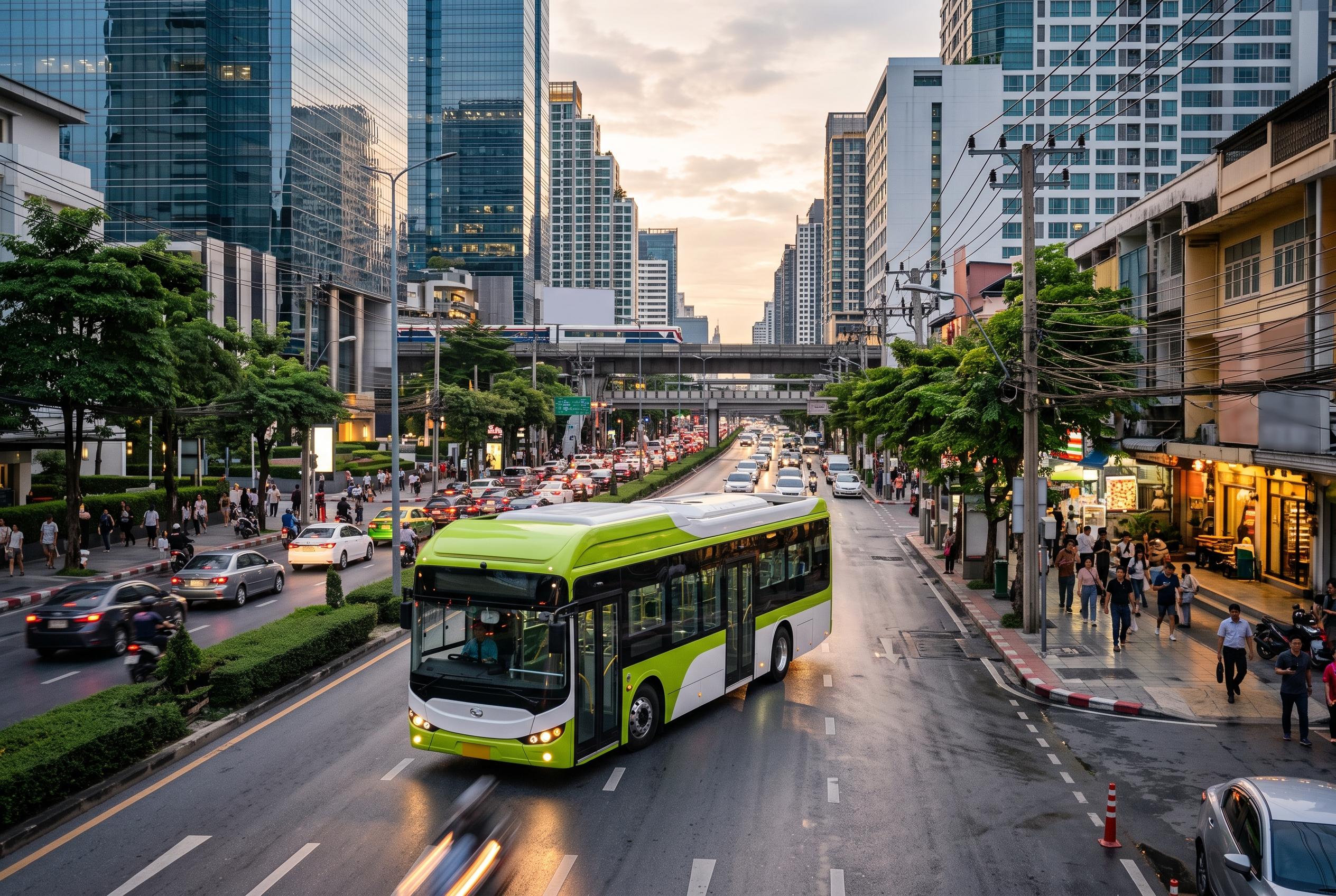
Bangkok plans to replace its ageing fleet with 1,520 electric buses by 2027 in a move to modernise, reduce emissions, and improve urban mobility for locals and visitors alike.
Bangkok’s bus network is set for a major overhaul that should matter to visitors as well as daily commuters, with the Bangkok Mass Transit Authority preparing to replace its ageing non-air-conditioned fleet with 1,520 electric buses by 2027. According to The Thaiger, the first vehicles are due to arrive by the end of March that year, with the change aimed at making rides cleaner, quieter and more comfortable on some of the city’s busiest urban routes.
For travellers, the most immediate impact will be on the experience of getting around central Bangkok. The new buses are expected to be deployed first on nearly 50 routes under reform, including inner-city loop services and connections through major districts such as Silom, Bang Rak, Khlong Toei and Rama IV. The routes also include links into the suburbs, which could make the city’s public transport network easier to use for both sightseeing and airport or hotel connections, especially on corridors that currently rely on older, less comfortable buses.
The BMTA says the fleet replacement should also improve safety and reliability. The new buses will be fitted with CCTV, GPS and accessibility features, while a series of demonstration vehicles are being used to test braking, handling and driver training. Two prototypes have already been completed, and a third is due to be shown publicly on 24 September, when the agency marks its 50th anniversary. The first 500 buses are expected by March 2027, followed by another 500 in April and the final 520 in May, according to the report.
The shift is also part of a wider clean-energy push in Bangkok public transport. The cream-and-red non-air-conditioned buses are due to be retired one for one, and fares are expected to stay in the rough range of 15 to 25 baht, in line with existing air-conditioned bus conditions. The BMTA says lower electricity costs, less maintenance and new fleet-management systems could save about 4.1 billion baht a year once the programme is fully rolled out, which it hopes will help stabilise its finances and support a more modern service for passengers.
Source Reference Map
Inspired by headline at: [1]
Sources by paragraph:
Source: Noah Wire Services
Noah Fact Check Pro
The draft above was created using the information available at the time the story first
emerged. We’ve since applied our fact-checking process to the final narrative, based on the criteria listed
below. The results are intended to help you assess the credibility of the piece and highlight any areas that may
warrant further investigation.
Freshness check
Score:
8
Notes:
The article was published on September 3, 2026, reporting on BMTA's plan to roll out 1,520 electric buses by 2027. The earliest known publication date of similar content is August 21, 2026, from a Thai PBS article. The Thaiger's article appears to be a timely update, with no significant discrepancies in figures, dates, or quotes. However, the article includes updated data but recycles older material, which raises concerns about originality.
Quotes check
Score:
6
Notes:
The article includes direct quotes attributed to BMTA Director Kittikan Chomdoung Charuworapolkul. A search for these quotes reveals that they appear in earlier material, indicating potential reuse. The wording of the quotes varies slightly between sources, which could be due to paraphrasing or translation differences. No online matches were found for some quotes, making independent verification challenging.
Source reliability
Score:
7
Notes:
The Thaiger is a news outlet based in Thailand. While it is a known source, it is not as widely recognised as major international news organisations. The article cites a Thai PBS article from August 21, 2026, which adds credibility. However, the reliance on a single source for key information raises concerns about source independence.
Plausibility check
Score:
8
Notes:
The BMTA's plan to roll out 1,520 electric buses by 2027 aligns with Thailand's broader efforts to modernise public transportation and reduce emissions. The article provides specific details about the deployment schedule, routes, and expected benefits, which are plausible and consistent with known industry trends. However, the lack of independent verification for some claims reduces the overall confidence in the report's accuracy.
Overall assessment
Verdict (FAIL, OPEN, PASS): REVIEW
Confidence (LOW, MEDIUM, HIGH): MEDIUM
Summary:
The article provides timely information about BMTA's plan to roll out 1,520 electric buses by 2027. However, the reliance on a single source, potential reuse of quotes, and lack of independent verification from other reputable outlets raise concerns about the accuracy and reliability of the information. Further independent verification is recommended before publishing.