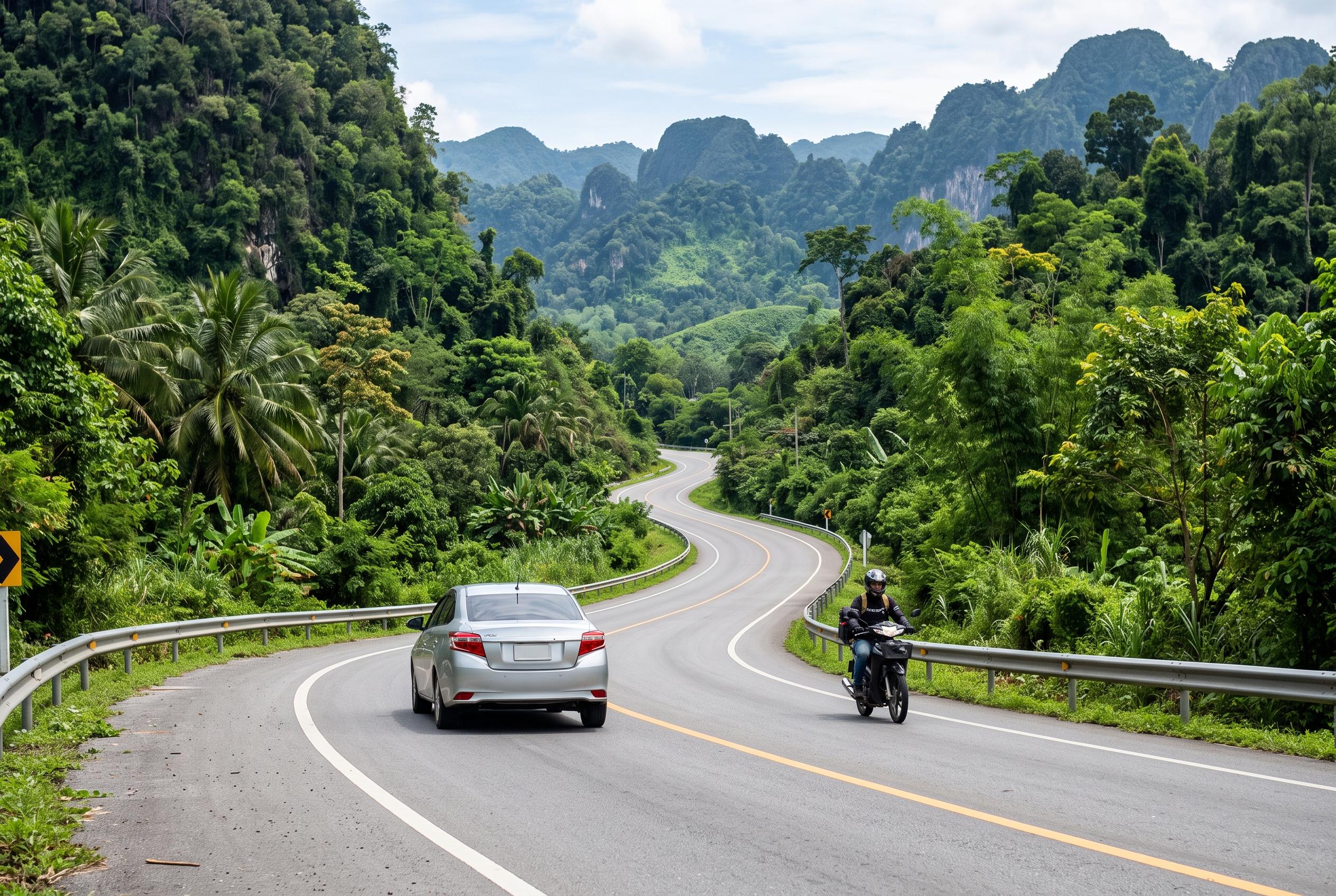
Malaysians driving or riding into Thailand are warned to review local traffic laws and insurance requirements, as Thai authorities enforce stricter penalties, with recent incidents highlighting the risks of non-compliance.
Malaysians driving or riding into Thailand are being reminded to check the rules before crossing the border, after police in Kelantan warned that local traffic laws can differ sharply from those at home. For holidaymakers heading to places such as Hat Yai, Songkhla or other border destinations, the main message is simple: what is acceptable in Malaysia may still earn a fine, or worse, in Thailand.
Kelantan police chief Datuk Mohd Yusoff Mamat said motorists and motorcyclists should familiarise themselves with Thai regulations before travelling, pointing out that modified bikes are one area where the two countries may not see eye to eye. He also urged travellers to make sure they have the right insurance cover, so they do not end up detained or penalised on the other side of the border.
The warning follows reports that 17 Malaysian motorcyclists travelling to Hat Yai were issued 15 summonses by Thai authorities, costing 15,000 baht, for offences including flashing lights, loud exhausts and other violations. That echoes earlier reporting in March that Thailand was preparing tougher penalties for foreign drivers, with fines of up to 20,000 baht and possible jail terms for offences such as speeding, running red lights and using a mobile phone without hands-free equipment.
Travellers should also note practical paperwork issues. The Road Transport Department has advised Malaysians to carry a physical driving licence when entering Thailand, as digital licences are not recognised by Thai authorities, and one driver was reportedly fined for showing only a digital version at a checkpoint. For those taking their own vehicles, insurers and cross-border providers have also been promoting Thailand motor cover, but the key point for visitors remains the same: before setting off, check your licence, insurance and vehicle modifications, and assume Thai road rules will be enforced strictly.
Source Reference Map
Inspired by headline at: [1]
Sources by paragraph:
Source: Noah Wire Services
Noah Fact Check Pro
The draft above was created using the information available at the time the story first
emerged. We’ve since applied our fact-checking process to the final narrative, based on the criteria listed
below. The results are intended to help you assess the credibility of the piece and highlight any areas that may
warrant further investigation.
Freshness check
Score:
7
Notes:
The article was published on August 19, 2026. Similar content appeared on March 30, 2026, regarding stricter enforcement of traffic laws in Thailand for Malaysian drivers, including fines up to 20,000 baht and potential jail terms. ([malaymail.com](https://www.malaymail.com/news/malaysia/2026/03/30/malaysian-drivers-in-thailand-beware-steep-fines-and-jail-await-those-who-flout-traffic-laws-from-april/214389?utm_source=openai)) Additionally, a report from July 10, 2026, highlighted a Malaysian driver fined 1,000 baht for not having a physical driving licence at a roadblock in Thailand. ([paultan.org](https://paultan.org/2026/07/10/malaysian-driver-fined-for-not-having-physical-licence-at-road-block-in-thailand/?utm_source=openai)) The current article reiterates these points, suggesting it may be a republished or updated version of earlier reports. The inclusion of updated data, such as the specific fine amount of 1,000 baht, indicates an attempt to provide fresh information. However, the core narrative appears to be recycled from previous reports. Given the overlap with earlier publications, the freshness score is reduced.
Quotes check
Score:
6
Notes:
The article includes direct quotes from Kelantan police chief Datuk Mohd Yusoff Mamat, advising motorists and motorcyclists to familiarise themselves with Thai regulations and to ensure they have the right insurance cover. These quotes are consistent with statements made in earlier reports from March 30, 2026, and July 10, 2026. ([malaymail.com](https://www.malaymail.com/news/malaysia/2026/03/30/malaysian-drivers-in-thailand-beware-steep-fines-and-jail-await-those-who-flout-traffic-laws-from-april/214389?utm_source=openai)) The repetition of these quotes suggests they may have been reused from previous articles. While the quotes are consistent, their reuse raises concerns about the originality of the content.
Source reliability
Score:
8
Notes:
The article is published by Malay Mail, a major news organisation in Malaysia. The sources cited within the article include reputable publications such as the New Straits Times and Paultan.org. However, the article relies heavily on previously published reports, which may affect its originality. The inclusion of updated data and quotes from authoritative figures adds credibility, but the heavy reliance on earlier sources suggests a need for further independent verification.
Plausibility check
Score:
9
Notes:
The claims made in the article align with known information about traffic regulations in Thailand and the experiences of Malaysian drivers. Reports from March 30, 2026, and July 10, 2026, detail similar issues faced by Malaysian drivers in Thailand, including heavy fines and the requirement for a physical driving licence. ([malaymail.com](https://www.malaymail.com/news/malaysia/2026/03/30/malaysian-drivers-in-thailand-beware-steep-fines-and-jail-await-those-who-flout-traffic-laws-from-april/214389?utm_source=openai)) The advice to familiarise oneself with Thai regulations and ensure proper insurance coverage is consistent with previous recommendations. The consistency of these claims across multiple sources supports their plausibility.
Overall assessment
Verdict (FAIL, OPEN, PASS): REVIEW
Confidence (LOW, MEDIUM, HIGH): MEDIUM
Summary:
The article provides information consistent with previous reports on traffic regulations in Thailand for Malaysian drivers, including fines and the requirement for a physical driving licence. However, the heavy reliance on earlier publications and the reuse of quotes raise concerns about the originality and independence of the content. While the information is plausible and the sources are reputable, the lack of new, independently verified information suggests that further editorial review is necessary before publishing.