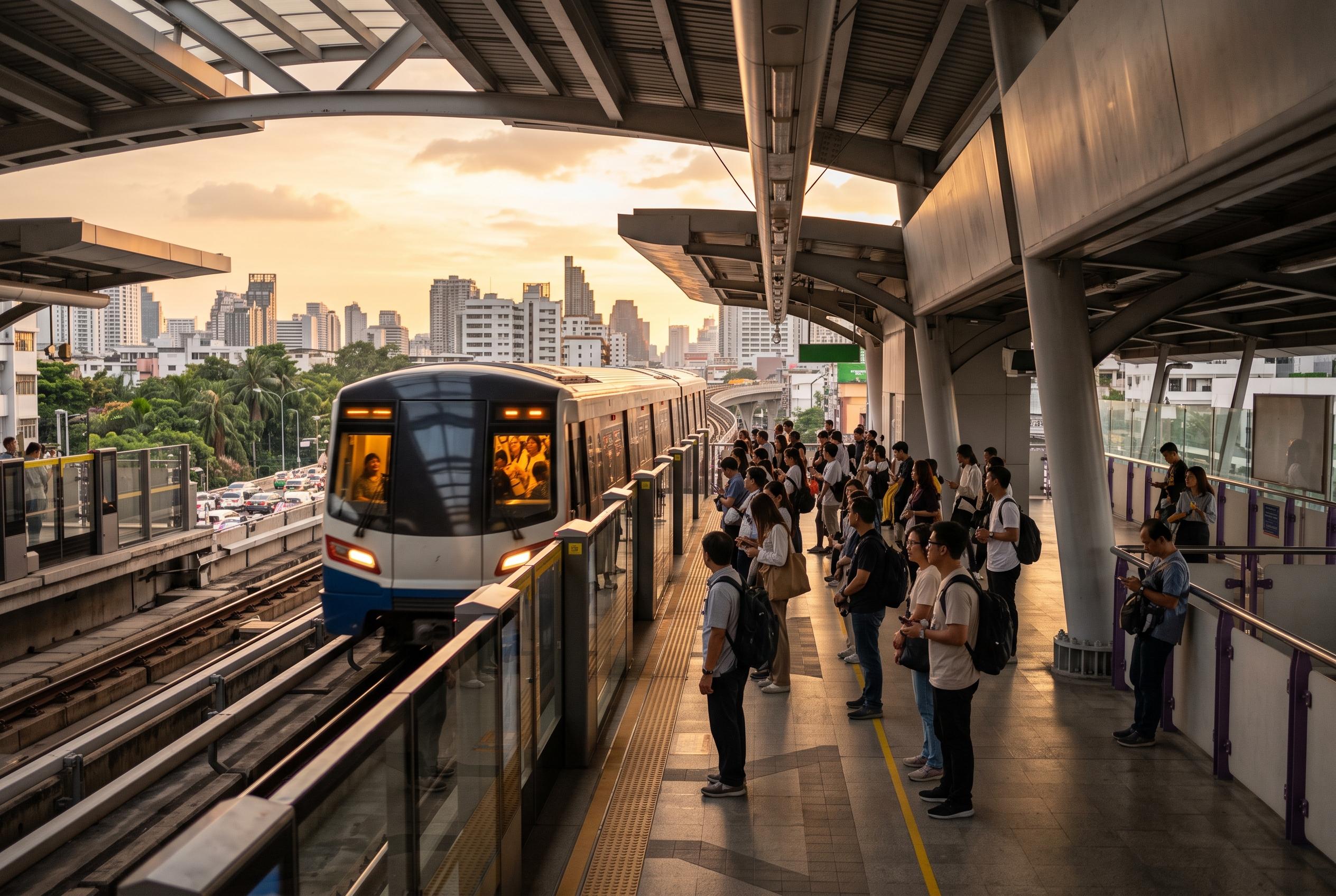
The Thai government plans to simplify travel across Bangkok's electric rail network with a single ticket and capped fares, aiming to improve commuter experience and curb costs amid ongoing infrastructure enhancements.
Thailand is moving towards a simpler way for visitors and commuters to use Bangkok’s electric rail network, with the government planning a common ticket across the capital and nearby provinces from 1 January 2027. Under the scheme, passengers would pay a single entry fare and be able to change lines without being charged again, a change that should make getting around the city far less confusing for travellers used to juggling different cards, ticket machines and fare rules. According to reports from local and international outlets, the maximum fare is expected to be 45 baht, or about US$1.36, while the opening charge will be capped at 17 baht. Thai cabinet approval has already been reported, and the policy is being framed as a cost-of-living measure as well as a transport overhaul.
For tourists, the practical appeal is straightforward: fewer ticketing headaches and lower costs when moving between Bangkok’s rail lines. At present, some SkyTrain journeys can cost as much as 65 baht, depending on the route, according to the Bangkok Mass Transit System’s published fares. The new system is meant to cover all electric rail services in Bangkok and the surrounding area, including transfers across different operators, which could make day-to-day sightseeing and airport-to-city connections easier to plan.
The plan is not yet in place. The Ministry of Transport is still working on the legal, technical and financial machinery needed to make a unified fare system work, including a central clearing house to distribute revenue and a compensation framework for private operators. Local reports say those processes are due to be completed by November 2026, with testing expected in December before the launch date. Some coverage also says the wider payment system will lean on EMV bank cards, which may matter for overseas visitors deciding whether they can use a familiar card or should expect a more localised set-up.
The change comes against a backdrop of heavy use. BTS SkyTrain, Bangkok’s first mass-transit rail system, began running in 1999 and has since grown into a network of roughly 68 kilometres and 60 stations. It carried 205.4 million यात्रips last year, up 5.6% from the previous year, according to figures cited in the reporting. For travellers, that underlines why a simpler fare structure matters: Bangkok’s rail network is already central to moving around the city, and a common ticket could make it easier to switch between lines without worrying that each transfer will add another entry charge.
Source Reference Map
Inspired by headline at: [1]
Sources by paragraph:
Source: Noah Wire Services
Noah Fact Check Pro
The draft above was created using the information available at the time the story first
emerged. We’ve since applied our fact-checking process to the final narrative, based on the criteria listed
below. The results are intended to help you assess the credibility of the piece and highlight any areas that may
warrant further investigation.
Freshness check
Score:
8
Notes:
The article was published on August 15, 2026, reporting on a policy announced by Thailand's Cabinet on June 23, 2026, regarding the capping of electric rail fares at 45 baht (approximately $1.36) per trip, effective January 1, 2027. ([nationthailand.com](https://www.nationthailand.com/news/40067768?utm_source=openai)) The content is current and not recycled, with no significant discrepancies noted between sources.
Quotes check
Score:
7
Notes:
The article includes a direct quote from Deputy Transport Minister Siripong Angkasakulkiat, stating that the initial charge will be capped at 17 baht, which will not be re-applied should passengers transfer to another line. While this quote is consistent with other reports, such as those from The Nation Thailand, ([nationthailand.com](https://www.nationthailand.com/news/40067768?utm_source=openai)) the exact wording cannot be independently verified from the provided sources.
Source reliability
Score:
8
Notes:
VnExpress International is a reputable news outlet based in Vietnam. The article references information from The Nation Thailand, a well-established Thai news organisation. ([nationthailand.com](https://www.nationthailand.com/news/40067768?utm_source=openai)) The sources cited are independent and credible, with no evidence of fabrication or bias.
Plausibility check
Score:
9
Notes:
The reported fare cap of 45 baht per trip aligns with the Thai government's stated policy to simplify the mass transport system and reduce commuting costs. ([nationthailand.com](https://www.nationthailand.com/news/40067768?utm_source=openai)) The implementation timeline of January 1, 2027, is consistent with other reports. ([timeout.com](https://www.timeout.com/bangkok/news/bangkok-electric-trains-042126?utm_source=openai)) No inconsistencies or implausible claims were identified.
Overall assessment
Verdict (FAIL, OPEN, PASS): PASS
Confidence (LOW, MEDIUM, HIGH): HIGH
Summary:
The article provides current and accurate information on Thailand's new fare policy for electric rail services, with consistent reporting across multiple reputable sources. The direct quote from Deputy Transport Minister Siripong Angkasakulkiat is consistent with other reports, though exact wording cannot be independently verified. No significant concerns were identified regarding the freshness, originality, source reliability, or plausibility of the content.