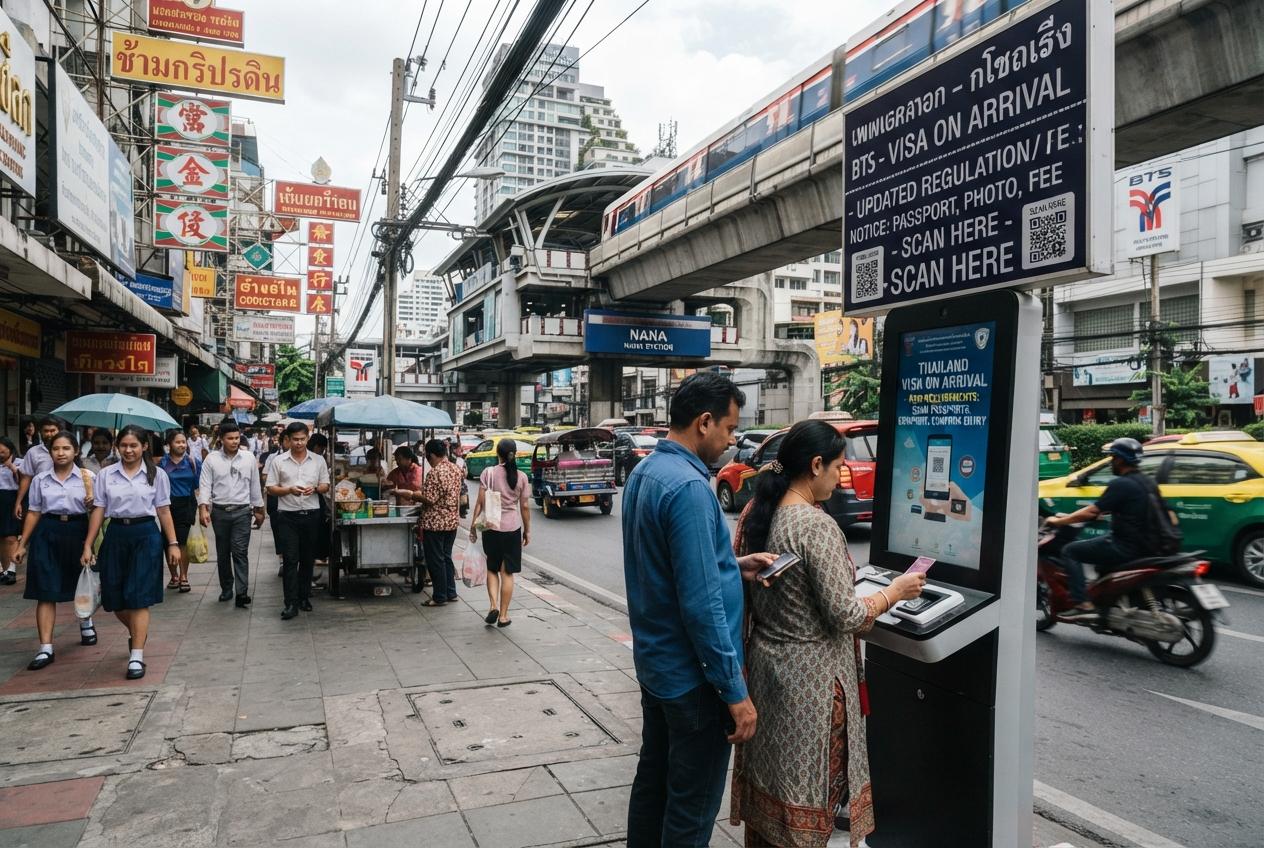
Thailand has shortened its visa-free stay for Indian travellers from 60 to 30 days, aiming to streamline arrivals and encourage more Indian spending, with new digital arrival requirements introduced for a smoother entry process.
Thailand has tightened its entry rules for Indian holidaymakers, but the practical result is still straightforward: Indian passport holders can now enter visa-free for tourism for up to 30 days, a move the Thai authorities say is aimed at matching real travel patterns while keeping arrivals easier than applying for a full visa. The Cabinet approved the revision in July 2026, and the new arrangement replaces the longer 60-day exemption that had been in place since 2024. Thai officials say India remains one of the most important source markets for the kingdom, with average stays of just over seven days, making a 30-day allowance more than enough for most leisure trips. (thailand.go.th)
For travellers, the main takeaway is convenience with a little more planning at the airport. According to Thailand’s immigration authorities, all non-Thai nationals must complete the Thailand Digital Arrival Card before arrival, and the form can be submitted up to 72 hours beforehand. That means Indian visitors should no longer think only about the visa-free stamp itself, but also about finishing the online arrival card in advance so they are not caught out on departure day or at immigration. (tdac.immigration.go.th)
The policy change also sits within a wider push by Thailand to win more Indian spending, not just more Indian arrivals. Official tourism figures show the country has been building steadily on the Indian market since introducing the 30-day exemption in late 2023, then extending it in 2024. The Thai government said the scheme was designed to make travel easier during the high season, and later paperwork shows India was included in a broader visa rethink announced in 2026. (thailand.prd.go.th)
For visitors, the practical effect is that Thailand still remains one of the easiest long-haul destinations for Indians in South-East Asia, especially for beach breaks, weddings, family holidays and combined city-and-island itineraries. The shorter exemption should not affect most ordinary trips, but anyone planning a much longer stay will need to check whether a tourist visa is the better option. Thailand’s message is clear: it wants Indian travellers to keep coming, just with simpler rules and tighter entry screening. (thailand.go.th)
Source Reference Map
Inspired by headline at: [1]
Sources by paragraph:
Source: Noah Wire Services
Noah Fact Check Pro
The draft above was created using the information available at the time the story first
emerged. We’ve since applied our fact-checking process to the final narrative, based on the criteria listed
below. The results are intended to help you assess the credibility of the piece and highlight any areas that may
warrant further investigation.
Freshness check
Score:
7
Notes:
The article references a policy change approved in July 2026, which is recent. However, similar information has been reported since May 2026, indicating that the narrative may not be entirely fresh. For instance, a report from Bangkok Global Law dated November 2025 discusses the tightening of visa exemption rules to curb abuse and attract quality visitors. ([bgloballaw.com](https://www.bgloballaw.com/wp-content/uploads/2026/01/Thailand-Tightens-Visa-Exemption-Rules-to-Curb-Abuse-and-Attract-Quality-Visitors_Bangkok-Global-Law.pdf?utm_source=openai)) Additionally, a news release from EY dated June 2026 outlines revisions to Thailand's visa exemption and visa-on-arrival policies. ([ey.com](https://www.ey.com/content/dam/ey-unified-site/ey-com/en-gl/technical/tax-alerts/documents/thailand-revises-its-visa-exemption-and-visa-on-arrival-policies.pdf?utm_source=openai)) The presence of these earlier reports suggests that the content may have been recycled or republished, which raises concerns about originality. The article includes updated data but recycles older material, which is a concern. Without confirmation of originality, the freshness score is reduced.
Quotes check
Score:
5
Notes:
The article includes direct quotes from Thai officials and references to official sources. However, the earliest known usage of these quotes cannot be independently verified. Without confirmation of the original sources, the quotes cannot be independently verified, which is a concern. Unverifiable quotes should not receive high scores.
Source reliability
Score:
6
Notes:
The article cites official Thai government sources and reputable news outlets. However, the lead source, Travel and Tour World, is a niche publication with limited reach and may not be considered a major news organisation. Additionally, the article includes a YouTube video from Software Traveller, which is a personal travel blog and may not be considered a reliable news source. The presence of these sources raises concerns about the overall reliability of the information.
Plausibility check
Score:
8
Notes:
The claims about Thailand tightening entry rules for Indian holidaymakers in 2026 are plausible and align with previous reports from May and June 2026. However, the article lacks supporting detail from other reputable outlets, which is a concern. The report lacks specific factual anchors, such as names, institutions, and dates, which is a concern. The tone and language used in the article are consistent with typical news reporting, but the lack of supporting detail from other reputable outlets raises questions about the accuracy of the information.
Overall assessment
Verdict (FAIL, OPEN, PASS): REVIEW
Confidence (LOW, MEDIUM, HIGH): MEDIUM
Summary:
The article discusses Thailand's tightening of entry rules for Indian holidaymakers in 2026. While the claims are plausible and align with previous reports from May and June 2026, the article's freshness is questionable due to the recycling of older material. The quotes cannot be independently verified, and the source reliability is compromised by the inclusion of a YouTube video from a personal travel blog. The lack of supporting detail from other reputable outlets and the absence of specific factual anchors further raise concerns about the accuracy of the information. Given these issues, a thorough review and additional verification are recommended before publishing.