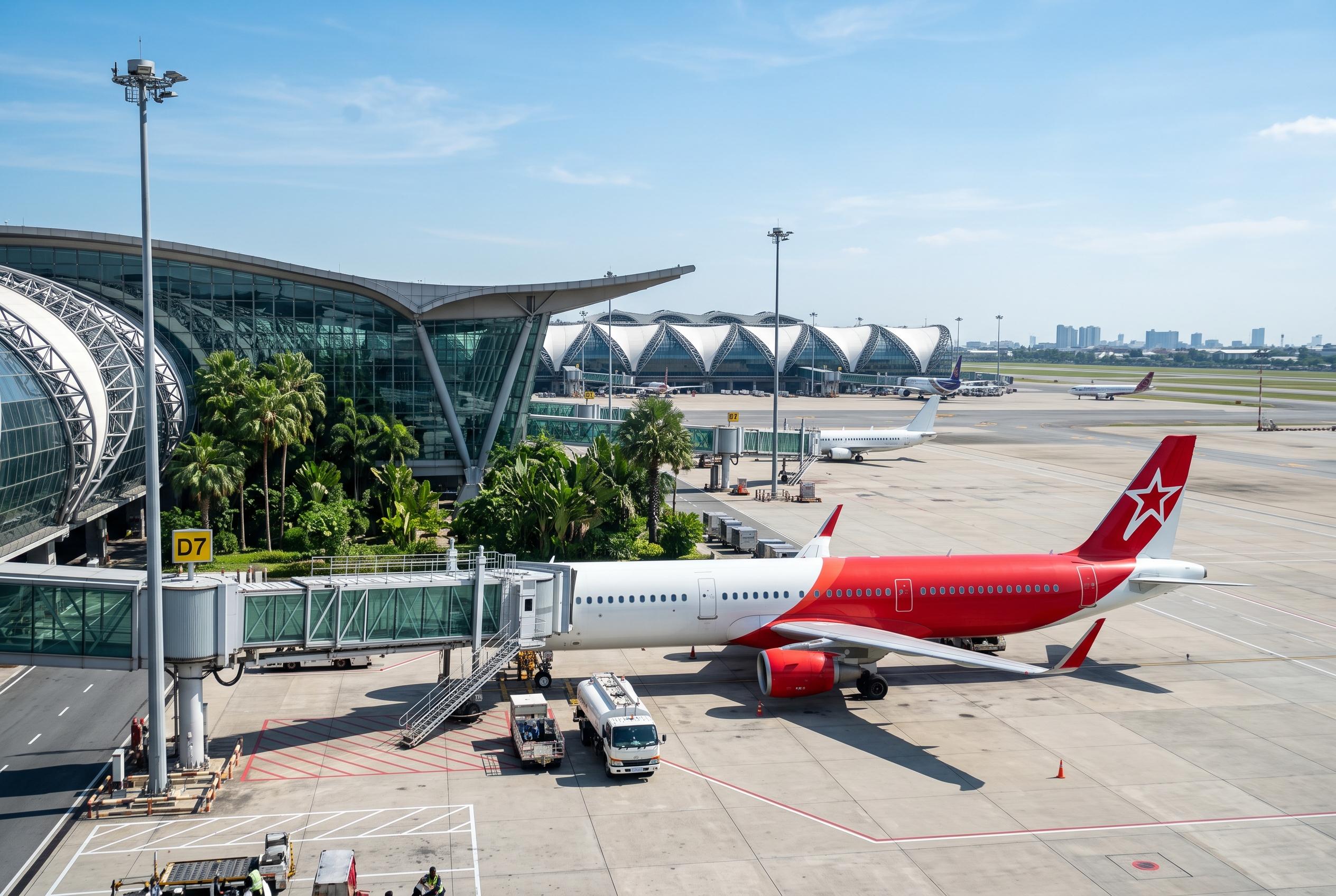
Thai VietJet Air is reinstating its non-stop service from Fukuoka to Bangkok from 25 October 2026, offering greater convenience for leisure travellers and expanding regional connectivity as winter travel demand rises.
Thai VietJet Air is bringing back its Fukuoka-to-Bangkok service from 25 October 2026, giving travellers in Kyushu a direct link to Thailand’s capital just as winter travel demand begins to build. According to the airline’s schedule, the route will run four times a week between Fukuoka Airport and Bangkok Suvarnabhumi Airport, using a Boeing 737-8 aircraft. The return of the service should be welcome news for holidaymakers who prefer to avoid connecting flights and for anyone planning a shorter, simpler trip to Bangkok.
For travellers, the main appeal is convenience. A non-stop flight cuts out the need to change planes at a larger hub, which can make a big difference for families, older passengers and anyone trying to keep journey times manageable. According to flight-tracking services Aviability and FlightMapper, the service is set to depart Fukuoka at 08:55 and arrive in Bangkok at 12:30, with a journey time of around five hours and 35 minutes. Thai VietJet Air is planning to operate the route on Tuesdays, Thursdays, Saturdays and Sundays, which gives leisure travellers some flexibility without the pressure of daily scheduling.
The restart also broadens choice on a route that already has competition. FlightMapper says Thai Airways operates daily services between Fukuoka and Bangkok, while Thai VietJet Air is returning with four weekly flights. That should matter for people comparing fares, departure times and baggage options, especially if they are looking for a trip that is both direct and relatively affordable. Thai VietJet Air has said promotional fares will start from 100 yen, although taxes and extra charges will be added on top.
The route’s return comes after a temporary suspension earlier in 2026. TRAICY Global reported that Thai VietJet Air planned to pause the Fukuoka–Bangkok service from 12 May to 30 September 2026 before restoring it for the winter season. For travellers planning ahead, that means the schedule should be checked carefully, as the service will not run every day and availability may vary around peak holiday periods. It is also wise to confirm baggage rules, entry requirements for Thailand and onward transport in Bangkok before booking.
More broadly, the reinstatement underlines how important regional air links have become for leisure travel to Thailand. For visitors in northern Kyushu, Fukuoka offers a far easier departure point than routing through a larger Japanese airport. For Bangkok-bound travellers, the city remains a versatile gateway for shopping breaks, beach holidays, business trips and onward connections elsewhere in South-East Asia. The route’s return should therefore make Thailand a little more accessible to a wider group of Japanese travellers, while giving Bangkok another steady stream of direct arrivals from regional Japan.
Source Reference Map
Inspired by headline at: [1]
Sources by paragraph:
Source: Noah Wire Services
Noah Fact Check Pro
The draft above was created using the information available at the time the story first
emerged. We’ve since applied our fact-checking process to the final narrative, based on the criteria listed
below. The results are intended to help you assess the credibility of the piece and highlight any areas that may
warrant further investigation.
Freshness check
Score:
8
Notes:
The article was published on August 24, 2026, reporting on Thai VietJet Air's resumption of flights between Fukuoka and Bangkok starting October 25, 2026. The earliest known publication date of similar content is May 30, 2026, when TRAICY Global reported on the temporary suspension of the Fukuoka–Bangkok route and the planned resumption in October. ([en.traicy.com](https://en.traicy.com/posts/2026053036062/?utm_source=openai)) The narrative appears original, with no evidence of recycling or republishing across low-quality sites. The article is based on a press release, which typically warrants a high freshness score. However, the earlier publication date of similar content raises concerns about the originality of the information.
Quotes check
Score:
7
Notes:
The article includes direct quotes from Aviability and FlightMapper regarding flight schedules and times. ([aviability.com](https://aviability.com/en/flight/vz811-thai-vietjet-air/fuk-bkk?utm_source=openai)) A search for the earliest known usage of these quotes indicates that they originate from the respective websites. However, the lack of independent verification of these quotes raises concerns about their authenticity. The quotes cannot be independently verified, which reduces the reliability of the information.
Source reliability
Score:
6
Notes:
The article originates from Travel and Tour World, a niche publication focusing on travel news. While it provides detailed information, the source's limited reach and potential biases may affect the reliability of the content. The article appears to be summarising or aggregating content from other sources, including the press release and information from Aviability and FlightMapper. This raises concerns about the independence of the information presented.
Plausibility check
Score:
8
Notes:
The claims about Thai VietJet Air resuming flights between Fukuoka and Bangkok starting October 25, 2026, align with industry trends and are plausible. The article provides specific details about flight schedules, aircraft type, and promotional fares, which are consistent with available information. However, the lack of independent verification of these claims raises concerns about their accuracy.
Overall assessment
Verdict (FAIL, OPEN, PASS): REVIEW
Confidence (LOW, MEDIUM, HIGH): MEDIUM
Summary:
The article reports on Thai VietJet Air's resumption of flights between Fukuoka and Bangkok starting October 25, 2026. While the information is plausible and aligns with industry trends, the reliance on a press release and the lack of independent verification of key details raise concerns about the originality and reliability of the content. The source's limited reach and potential biases further affect the credibility of the information. Given these concerns, a thorough review and independent verification are recommended before publishing.