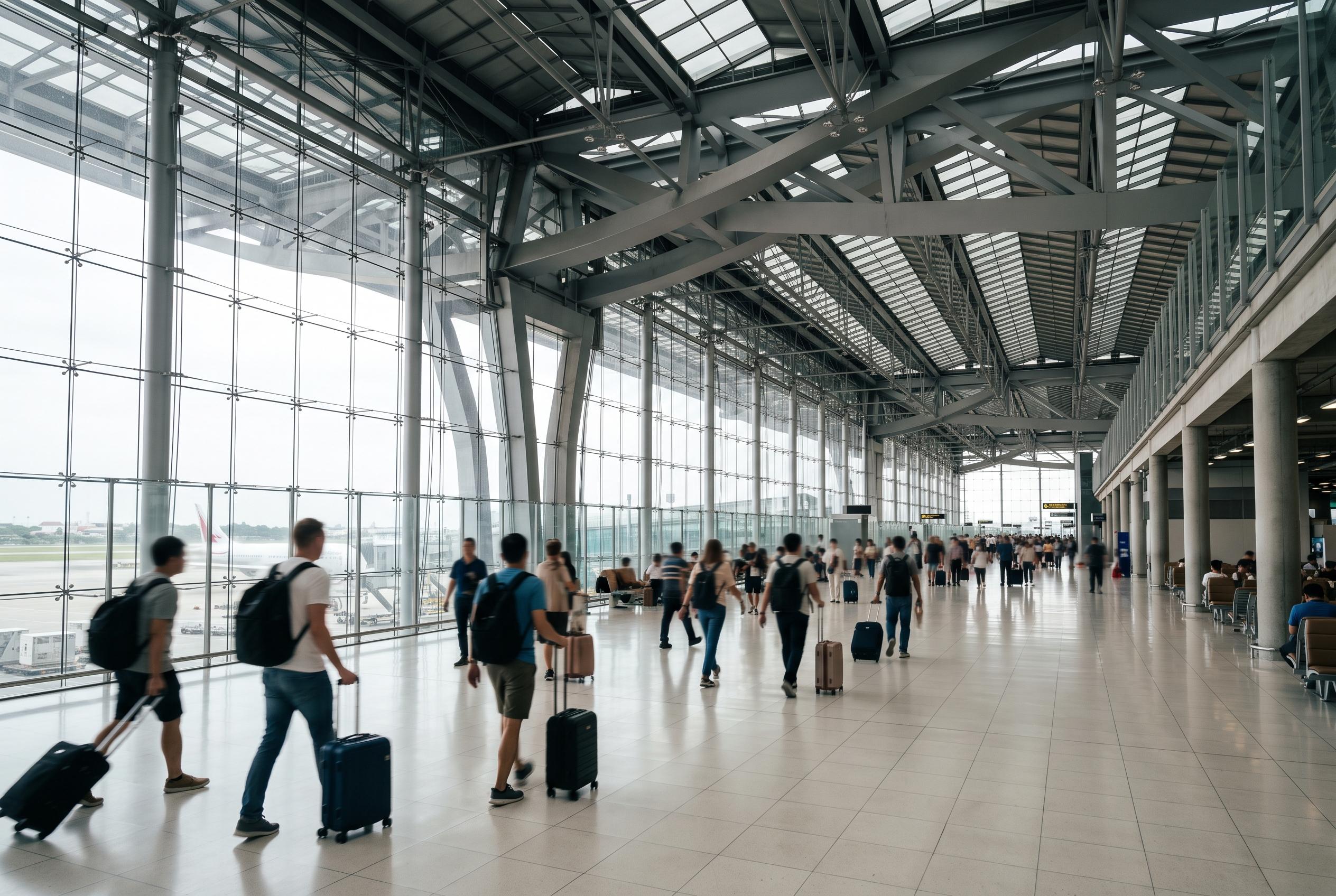
Travellers departing from Bangkok’s Suvarnabhumi Airport in 2026 should continue to adhere to the 100ml liquids rule for cabin baggage, with specific guidelines for bringing traditional Thai foods and exceptions for medicines and infant supplies, emphasising careful packing and early arrival.
Travellers leaving Bangkok’s Suvarnabhumi Airport in 2026 should assume the familiar liquids rule still applies: every bottle, tube, spray or similar item in hand baggage must be 100ml or smaller, and all of them must fit into one transparent resealable bag of up to one litre. Suvarnabhumi’s official guidance says a container over 100ml is not allowed in the cabin even if it is only partly full, so the size marked on the package matters more than how much is left inside.
That makes packing for a Thailand trip much simpler if done early. Toiletries should be transferred into travel-sized containers before reaching the airport, while creams, gels, pastes and aerosols should all be treated as liquids for screening purposes. AirHelp’s guide notes that this is the standard approach at most airports, although a few places with newer screening equipment now allow larger containers; that is not the case at Suvarnabhumi, where the airport and the Civil Aviation Authority of Thailand still keep to the 100ml limit.
The same rule also affects souvenirs and snacks. Suvarnabhumi says local or traditional foods that contain liquids and exceed 100ml should go in checked baggage, which matters for items such as curry paste, chilli sauce and similar Thai specialities that many visitors may not instinctively think of as liquids. If you want to bring them home, it is safer to pack them with leak protection in your hold luggage rather than risk losing them at security.
There are limited exceptions for medicines, baby food and special dietary liquids, but these must be declared at the security screening point. That means anyone travelling with prescription medicine or infant supplies should keep supporting documents close at hand and separate the items from the rest of their toiletries before joining the queue. The airport’s guidance is clear that these are exceptions, not a general relaxation of the rule.
For most leisure travellers, the practical takeaway is straightforward: keep cabin liquids in one clear one-litre bag, put anything larger in checked baggage, and re-check airport and airline guidance before departure in case local procedures change. Suvarnabhumi’s own advice also underlines the value of arriving with enough time to clear security and still reach the gate without rushing, particularly if you need to sort out a bag that does not meet the screening rules.
Source Reference Map
Inspired by headline at: [1]
Sources by paragraph:
Source: Noah Wire Services
Noah Fact Check Pro
The draft above was created using the information available at the time the story first
emerged. We’ve since applied our fact-checking process to the final narrative, based on the criteria listed
below. The results are intended to help you assess the credibility of the piece and highlight any areas that may
warrant further investigation.
Freshness check
Score:
8
Notes:
The article references guidelines from the Civil Aviation Authority of Thailand dated 5 March 2026, indicating recent information. However, the article itself was published on 15 August 2026, which is over five months later. This gap raises concerns about the timeliness of the information presented. Additionally, the article cites sources from 2026, but without specific publication dates, it's challenging to assess their freshness. ([suvarnabhumi.airportthai.co.th](https://suvarnabhumi.airportthai.co.th/service/airport-guide/detail/Liquid_BKK?utm_source=openai))
Quotes check
Score:
7
Notes:
The article includes direct quotes from Suvarnabhumi Airport's official guidelines. However, without specific publication dates for these quotes, it's difficult to verify their originality and freshness. The absence of clear timestamps raises concerns about the timeliness and potential reuse of content.
Source reliability
Score:
6
Notes:
The primary source, Suvarnabhumi Airport's official website, is reputable. However, the article also cites AirHelp, a third-party source, which may have its own biases or limitations. The lack of independent verification from multiple reputable sources diminishes the overall reliability of the information presented.
Plausibility check
Score:
9
Notes:
The claims about the 100ml liquid limit at Suvarnabhumi Airport align with standard international aviation security regulations. However, the article's reliance on a single source without independent confirmation raises questions about the accuracy and completeness of the information.
Overall assessment
Verdict (FAIL, OPEN, PASS): REVIEW
Confidence (LOW, MEDIUM, HIGH): MEDIUM
Summary:
The article presents information about Suvarnabhumi Airport's 2026 liquids security rule, referencing guidelines from March 2026. However, the publication date of the article (August 2026) introduces a significant delay, raising concerns about the timeliness and relevance of the information. The reliance on a single source without independent verification diminishes the overall reliability of the content. Given these factors, a thorough review and additional verification are recommended before publication.