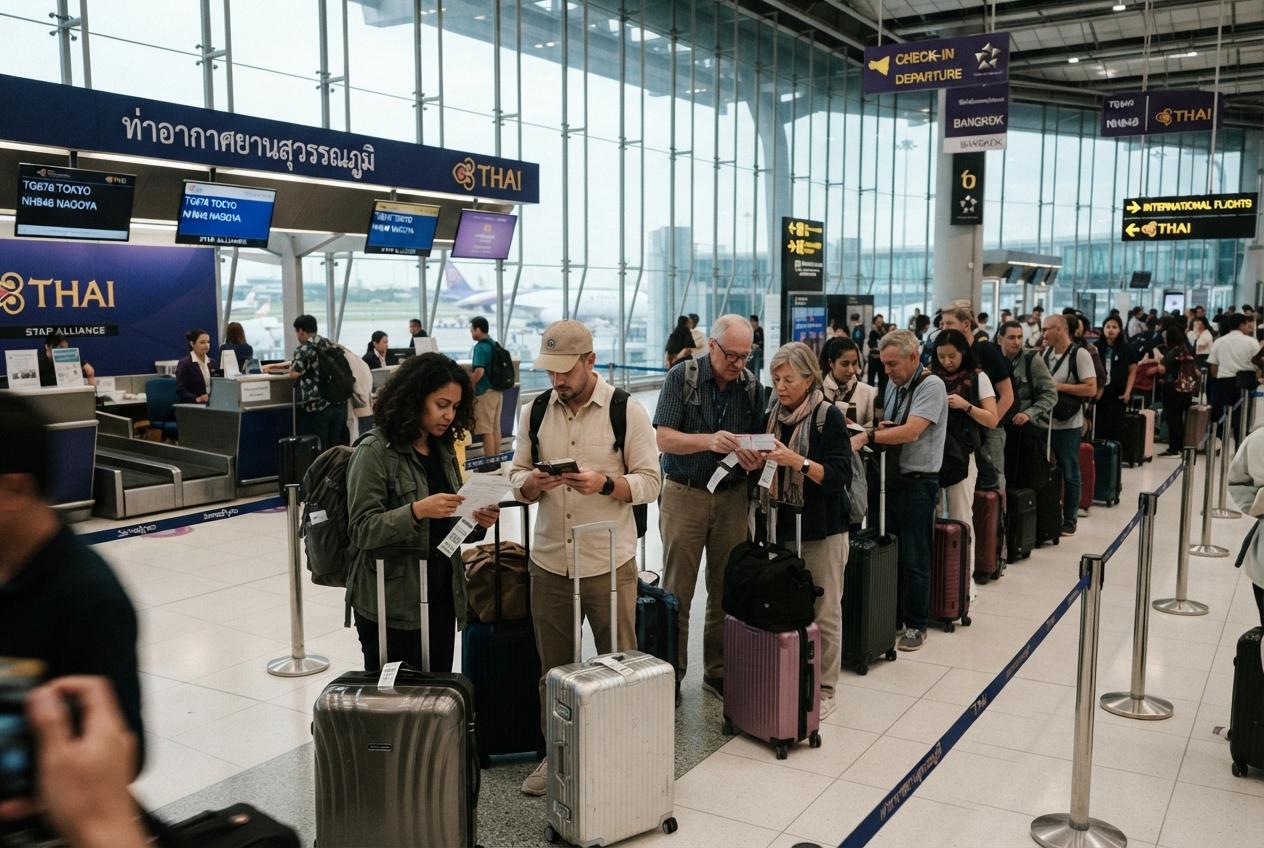
Thailand is set to introduce tighter checked baggage screening procedures from October 2026, encouraging travellers to pack more cautiously amid potential security inspections that could affect departure times and baggage handling.
Thailand is preparing to tighten the way checked bags are screened at its airports, a change that matters most for holidaymakers because it could affect how long departures take and what travellers pack in their suitcases. The Tourism Authority of Thailand says the revised procedures will apply to baggage checked on or after 16 October 2026, and passengers are being urged to confirm the latest rules with their airline, departure airport and the Civil Aviation Authority of Thailand before they fly. According to the notice, current procedures remain in place until then.
Under the new approach, security staff will be able to open checked luggage without the owner being present if screening raises concerns about suspicious, prohibited or potentially dangerous items. CAAT says this will not mean routine searches of every bag; rather, inspections will take place only when needed and will be carried out in a controlled area, with the process recorded on video. Travellers should then be told if their bag has been opened. The authority says the aim is to reduce delays while maintaining aviation security, and notes that similar practices are already used in countries including Singapore, Japan, South Korea and the United States.
For passengers, the practical advice is straightforward: use an internationally recognised lock, such as a TSA-compatible one, and avoid putting valuables, fragile items, important papers or essential personal belongings in checked baggage. CAAT also recommends checking the list of prohibited and restricted items before travel, because officers may confiscate items that are not allowed. For people making connections, the warning is especially relevant, as baggage and security rules can differ from one airport to another on the same journey.
Travellers who find that an inspection has caused damage, or have another issue linked to the process, can contact their airline or file a complaint with CAAT. The authority says further operational guidance may follow before the October start date. For anyone heading to Thailand later this year, the main takeaway is that airport security may become a little more flexible behind the scenes, but it also makes smarter packing more important than ever.
Source Reference Map
Inspired by headline at: [1]
Sources by paragraph:
Source: Noah Wire Services
Noah Fact Check Pro
The draft above was created using the information available at the time the story first
emerged. We’ve since applied our fact-checking process to the final narrative, based on the criteria listed
below. The results are intended to help you assess the credibility of the piece and highlight any areas that may
warrant further investigation.
Freshness check
Score:
8
Notes:
The article was published on 11 August 2026, reporting on new baggage screening procedures effective from 16 October 2026. Similar information was released by the Civil Aviation Authority of Thailand (CAAT) on 9 June 2026 ([caat.or.th](https://www.caat.or.th/en/do-you-know/204155/?utm_source=openai)), and by the Tourism Authority of Thailand (TAT) on 11 August 2026 . The TAT's release appears to be a direct dissemination of CAAT's announcement, suggesting the content is not original but rather a republishing of existing information. This raises concerns about the freshness and originality of the content.
Quotes check
Score:
6
Notes:
The article includes direct quotes from CAAT's announcement. However, these quotes are not independently verifiable online, as they appear to be sourced directly from CAAT's official release. This lack of independent verification raises concerns about the authenticity and reliability of the quotes.
Source reliability
Score:
7
Notes:
The primary source of the article is the TAT Newsroom, which is a government-affiliated entity. While it is a reputable source, its close association with the government may introduce potential biases. Additionally, the article relies heavily on CAAT's official announcements, which, while authoritative, may not provide a fully independent perspective.
Plausibility check
Score:
9
Notes:
The claims about enhanced baggage screening procedures align with previous announcements from CAAT and TAT. The procedures, including the use of TSA-approved locks and the potential for baggage inspections without the owner's presence, are consistent with international aviation security standards. However, the lack of independent reporting on these developments raises questions about the broader acceptance and implementation of these measures.
Overall assessment
Verdict (FAIL, OPEN, PASS): REVIEW
Confidence (LOW, MEDIUM, HIGH): MEDIUM
Summary:
The article reports on enhanced baggage screening procedures in Thailand, effective from 16 October 2026. However, it appears to be a republishing of existing information from CAAT and TAT, with no independent verification sources. The reliance on government-affiliated entities for information raises concerns about the freshness, originality, and objectivity of the content. Further independent verification is recommended before publishing.