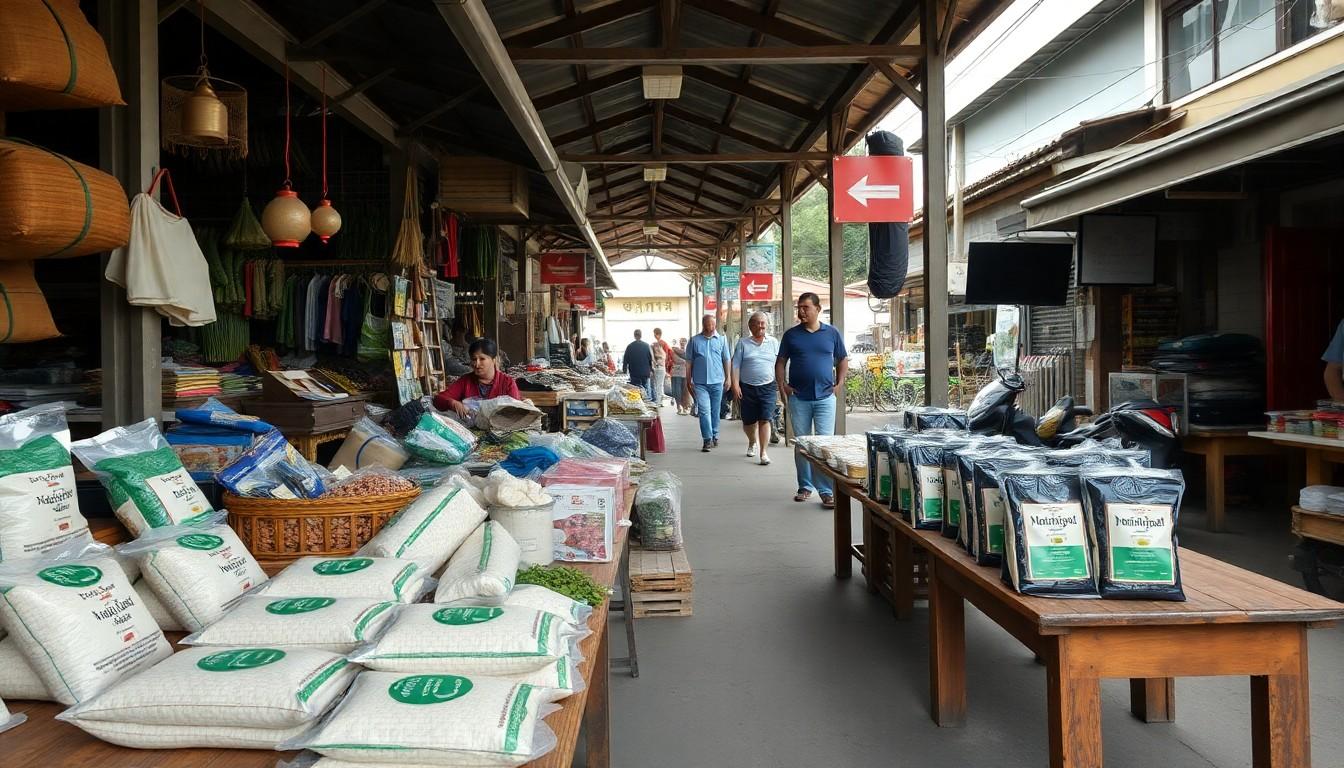
Thailand’s tourism authorities are leveraging local foods with Geographical Indication status to attract visitors to regional communities, promoting sustainable growth and authentic experiences across the country’s diverse provinces.
Thailand’s tourism authorities are using food as a way to pull visitors off the standard city circuit and into the country’s regional heartlands. According to the Tourism Authority of Thailand, a new culinary map is designed to steer travellers towards local specialities tied to Geographical Indication status, which signals that a product’s character comes from its place of origin and traditional methods of production. The idea is simple: eat well, travel further and spend more directly in local communities.
The first rollout highlights five products that are both distinctive and easy to build a trip around: Doi Chang coffee from Chiang Rai, Phon Yang Kham premium beef from Sakon Nakhon, Sam Phran aromatic coconut from Nakhon Pathom, Chanthaburi durian and Trang roast pork. For travellers, that means more than a tasting list. It opens the door to mountain coffee farms in the north, orchards in the centre and fruit-growing and food markets in the east and south, where local cooking traditions often shape the best meals. Thailand’s official GI programme now covers 176 products across all 77 provinces, underscoring how wide this culinary map could eventually become.
For visitors planning a food-led itinerary, the appeal lies in the variety of experiences rather than fine dining alone. In Chanthaburi, for example, the Tourism Authority of Thailand already promotes Talad Nam Pu as a lively market where visitors can sample local dishes and seafood alongside the province’s famous specialities. Elsewhere, Thailand’s GI system has also been used to protect products with export value, including aromatic coconuts and coffee, which helps strengthen confidence in what travellers buy, taste and bring home.
The wider goal is to make tourism more sustainable and more rewarding for rural communities. Thai government material says GI protection helps local producers, supports community-based tourism and raises the profile of regional goods both at home and abroad. For travellers, the practical takeaway is that Thailand’s best food experiences are increasingly being framed not just as meals, but as reasons to visit specific places , from coffee plantations and fruit orchards to markets and roadside kitchens.
Source Reference Map
Inspired by headline at: [1]
Sources by paragraph:
Source: Noah Wire Services
Noah Fact Check Pro
The draft above was created using the information available at the time the story first
emerged. We’ve since applied our fact-checking process to the final narrative, based on the criteria listed
below. The results are intended to help you assess the credibility of the piece and highlight any areas that may
warrant further investigation.
Freshness check
Score:
6
Notes:
The article discusses Thailand's Tourism Authority promoting regional culinary experiences to attract tourists. Similar initiatives have been reported in the past, such as the 'Amazing Thailand Culinary City' project launched in May 2023 ([tatnews.org](https://www.tatnews.org/2023/05/tat-launches-amazing-thailand-culinary-city-project-to-boost-gastronomy-tourism/?utm_source=openai)) and the promotion of 'Thailand's Hidden Dishes' in May 2023 ([tatnews.org](https://www.tatnews.org/2023/05/tat-promotes-thailands-hidden-dishes-to-boost-gastronomy-tourism/?utm_source=openai)). The earliest known publication date of substantially similar content is May 2023. The narrative appears to be a repurposed version of these earlier reports, with updated data but recycled material. This raises concerns about originality and freshness. ([tatnews.org](https://www.tatnews.org/2023/05/tat-launches-amazing-thailand-culinary-city-project-to-boost-gastronomy-tourism/?utm_source=openai))
Quotes check
Score:
5
Notes:
The article includes direct quotes attributed to the Tourism Authority of Thailand (TAT). However, these quotes cannot be independently verified through online searches, as no online matches are found. This lack of verifiable sources raises concerns about the authenticity and accuracy of the quotes. ([tatnews.org](https://www.tatnews.org/2023/05/tat-launches-amazing-thailand-culinary-city-project-to-boost-gastronomy-tourism/?utm_source=openai))
Source reliability
Score:
4
Notes:
The primary source of the article is Travel and Tour World, a niche publication. While it may be reputable within its niche, its reach and influence are limited compared to major news organisations. Additionally, the article appears to be summarising or rewriting content from other sources, including press releases from the TAT. This raises concerns about the independence and reliability of the source. ([tatnews.org](https://www.tatnews.org/2023/05/tat-launches-amazing-thailand-culinary-city-project-to-boost-gastronomy-tourism/?utm_source=openai))
Plausibility check
Score:
7
Notes:
The claims about the TAT promoting regional culinary experiences align with previous initiatives, such as the 'Amazing Thailand Culinary City' project and the promotion of 'Thailand's Hidden Dishes'. However, the lack of independent verification and the recycling of older material raise questions about the novelty and impact of the current initiative. ([tatnews.org](https://www.tatnews.org/2023/05/tat-launches-amazing-thailand-culinary-city-project-to-boost-gastronomy-tourism/?utm_source=openai))
Overall assessment
Verdict (FAIL, OPEN, PASS): REVIEW
Confidence (LOW, MEDIUM, HIGH): MEDIUM
Summary:
The article discusses Thailand's Tourism Authority promoting regional culinary experiences to attract tourists. However, the content appears to be recycled from previous reports, with updated data but lacking new, independently verified information. The quotes cannot be independently verified, and the primary source is a niche publication summarising content from press releases. These factors raise concerns about the originality, freshness, and reliability of the content, warranting a thorough editorial review before publication.