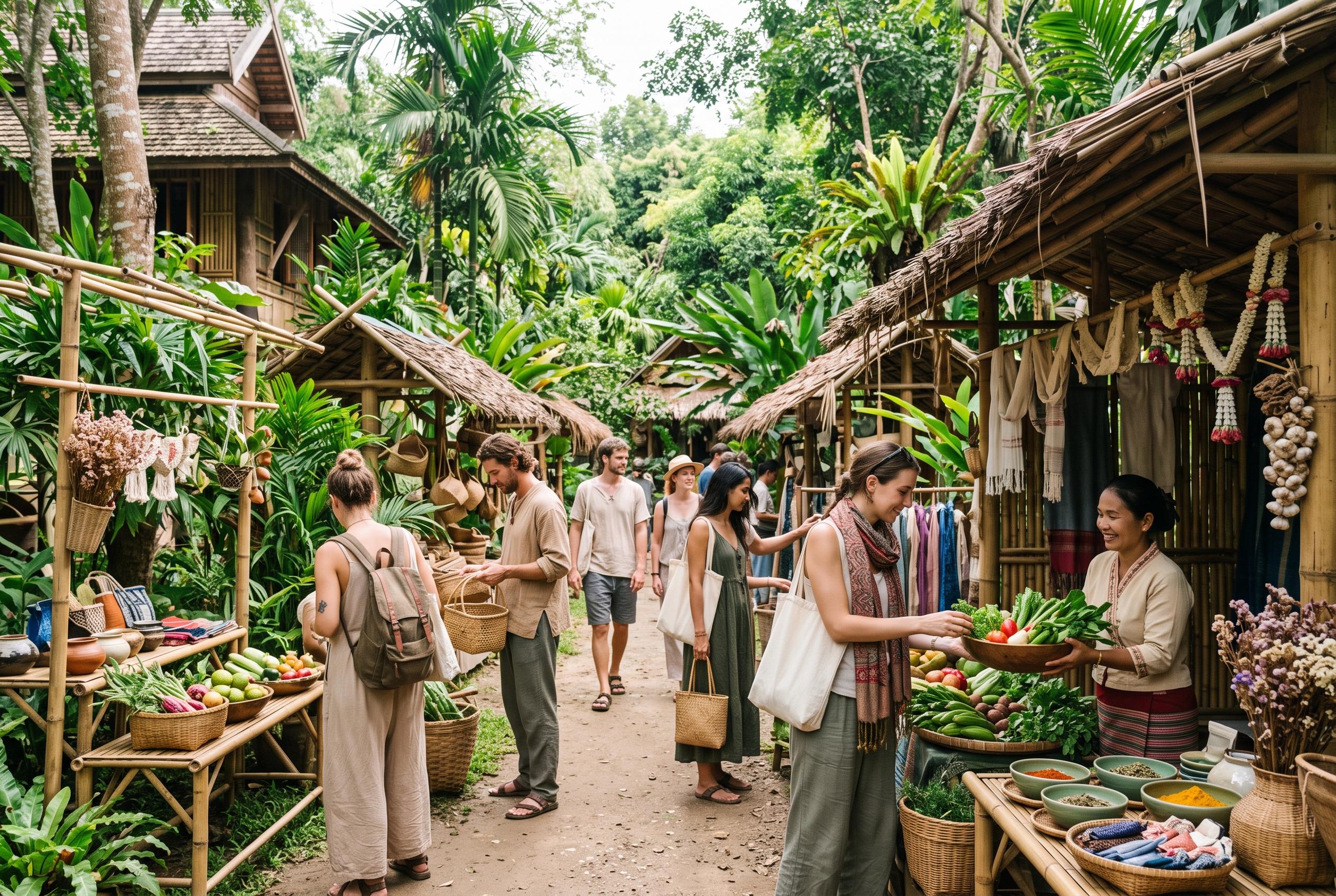
Chiang Mai is being used as Thailand’s latest test case for making tourism greener without stripping away what draws people there in the first place. According to the Tourism Authority of Thailand, the city is being positioned as a model for sustainable travel through the Amazing Chiang Mai Green Guide Fest 2026, a three-day event that begins on 28 August at Railway Park and is meant to showcase community participation, local products, food, culture and lower-impact visitor experiences.
The festival is part of the broader Chiang Mai Prototype, which TAT says is designed to strengthen the province’s tourism supply chain while building its profile as a global green destination. At a launch briefing in Bangkok on 21 August, officials said the model builds on earlier work in Krabi and is intended to push balanced growth by linking sustainability with Chiang Mai’s Lanna identity, rather than treating it as a separate add-on.
For visitors, the most tangible change will be in how the event is structured. The programme is divided into six zones, including a sustainability showcase featuring green standards and hotel certifications, a section on local craftsmanship and wellness, and a farm-to-table food area with more than 35 local food and drink businesses. There will also be business networking, community activities and cultural performances, from traditional dances and drumming to contemporary music acts, giving travellers more than a conference-style sustainability event and making it easier to see how responsible tourism can shape an actual trip.
TAT is also trying to make the event itself a cleaner operation. The festival has been certified as a Carbon Neutral Event by the Thailand Greenhouse Gas Management Organization, with waste separation, plastic reduction, resource efficiency and carbon-footprint controls built in. The estimated footprint is about 350 tonnes, roughly half the level of last year’s event, and electric shuttles will run between key parking points and the venue. That matters for travellers because it suggests sustainability is being applied to the logistics of the visit, not just the marketing around it.
The economic case is just as central. TAT expects about 15,000 Thai and overseas visitors over the three days, with spending at the festival topping 20 million baht and a wider boost of more than 100 million baht for Chiang Mai tourism. The city’s push also fits a wider pattern across Thailand, where Krabi, Phuket, Phang-nga and other destinations are leaning into greener travel as visitors increasingly look for more meaningful, lower-impact alternatives to standard beach-and-city itineraries. For travellers, that could mean more community-led experiences, better environmental standards and a stronger sense that their spending is supporting the places they came to see.
Source Reference Map
Inspired by headline at: [1]
Sources by paragraph:
- Paragraph 1: [2], [4]
- Paragraph 2: [3], [6]
- Paragraph 3: [2], [4], [5]
- Paragraph 4: [1], [2], [7]
- Paragraph 5: [1], [2], [3], [6]
Source: Noah Wire Services