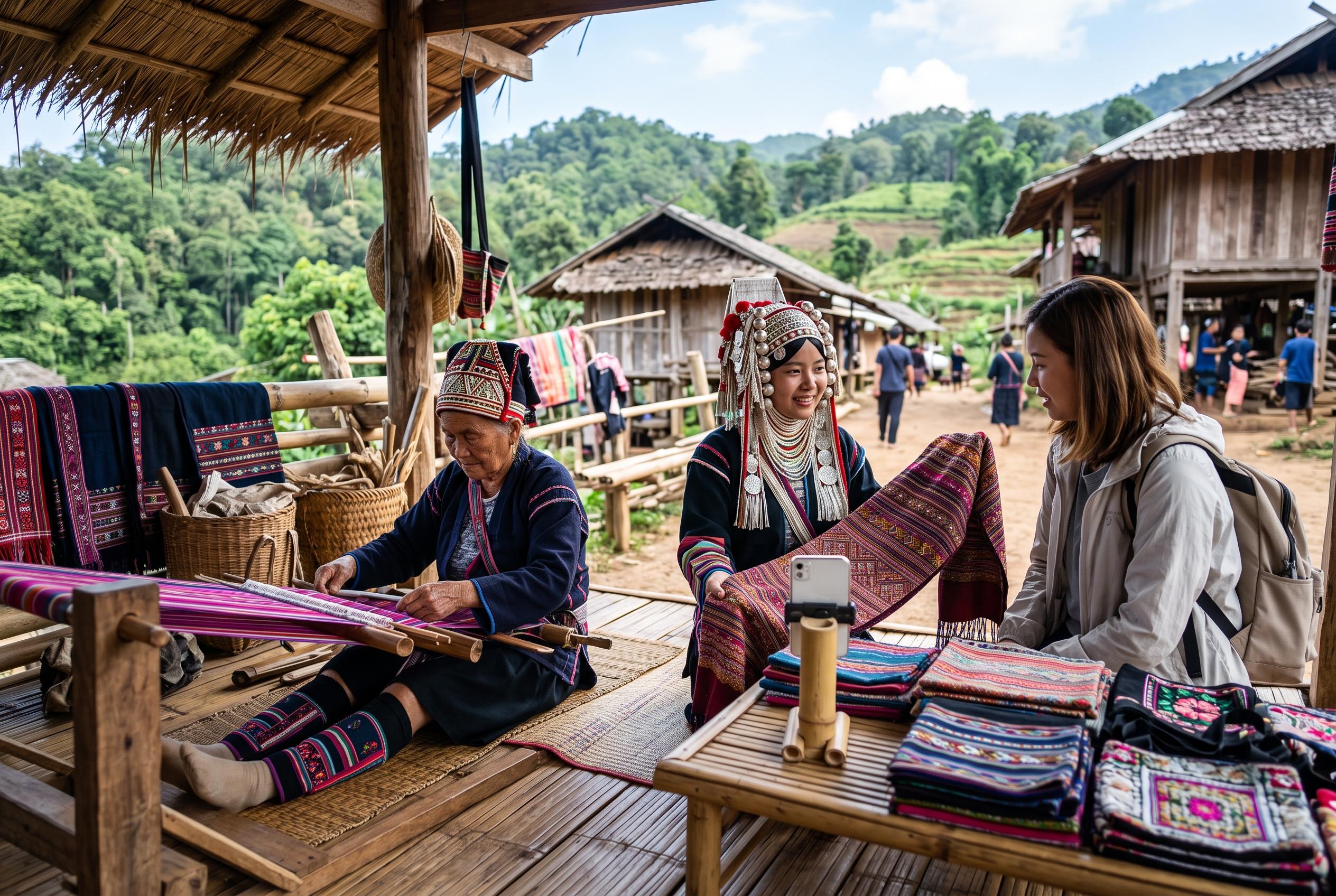
Chiang Rai’s hill-tribe communities are increasingly turning familiar skills into businesses that keep more value close to home. In the province’s highlands, coffee, textiles, eggs and craft sales are no longer just side income: they are becoming structured enterprises that give Akha, Karen, Lahu and other families a stronger hand in pricing, branding and sales. For travellers, that shift matters because it changes what a visit can offer: not a generic souvenir stop, but the chance to buy directly from producers whose work is tied to place, identity and local livelihood.
Coffee is the clearest example. Akha Ama Coffee, founded by Lee Ayu Chuepa from the Akha community, was created to help farmers process, market and price their own beans rather than depend on middlemen. The enterprise has since expanded beyond the village, with cafes and a roastery in Chiang Mai, and the Family Farming database at the Food and Agriculture Organisation says it works through direct trade and sustainable growing methods. Separately, the Mae Chan Tai community’s coffee business, co-owned with the Japanese non-profit GIAPSA, has been operating since 2010 and produces Arabica at high altitude in Chiang Rai, where it has also won national recognition. According to the enterprise, half of net profit is returned to local social, economic and environmental work.
Other Chiang Rai businesses follow a similar logic even when the product changes. Hilltribe Organics, established in 2013, works with hill-tribe families to produce free-range organic eggs, supplying chickens, feed, veterinary help and building materials before buying the eggs for premium buyers. That model lowers the start-up barrier for households that might otherwise struggle to enter formal markets. For visitors, it also shows why some local products cost more: the price is not only for the egg, coffee bean or woven item, but for the support system behind it.
Crafts and digital sales are widening the picture further. Reports on northern community training programmes show Akha and Karen participants learning accounting, product development, business management, online selling and registration, while other villagers have explored clothing and silverware sales through e-commerce. In practice, that means more products can reach buyers without relying only on roadside stalls or temporary tourist traffic. It also gives younger residents a reason to build careers at home, instead of leaving the hills for city work.
For travellers, the most useful question is not simply what to buy, but how to buy well. The best signs are traceability, local ownership and clear benefit to the producer community. Ask who made the coffee, who woven the textile, who receives payment and whether the seller can ship products directly. If a place offers a visit or tasting, confirm access in advance, check the fee, and do not assume that a purchase includes a private tour or photography rights. Respect matters as much as spending.
What is most appealing about Chiang Rai’s hill-tribe entrepreneurs is that they offer something beyond consumption. A cup of coffee, a box of eggs or a hand-woven item can support a business model that keeps skills in the village, sustains cultural knowledge and gives visitors a more meaningful way to engage with the north of Thailand. For travellers choosing where to go, that makes Chiang Rai a destination where shopping, eating and exploring can have a more direct link to the communities that make the region distinctive.
Source Reference Map
Inspired by headline at: [1]
Sources by paragraph:
- Paragraph 1: [1]
- Paragraph 2: [3], [2], [6]
- Paragraph 3: [4], [5]
- Paragraph 4: [1], [3]
- Paragraph 5: [1]
- Paragraph 6: [1], [2], [3], [4]
Source: Noah Wire Services