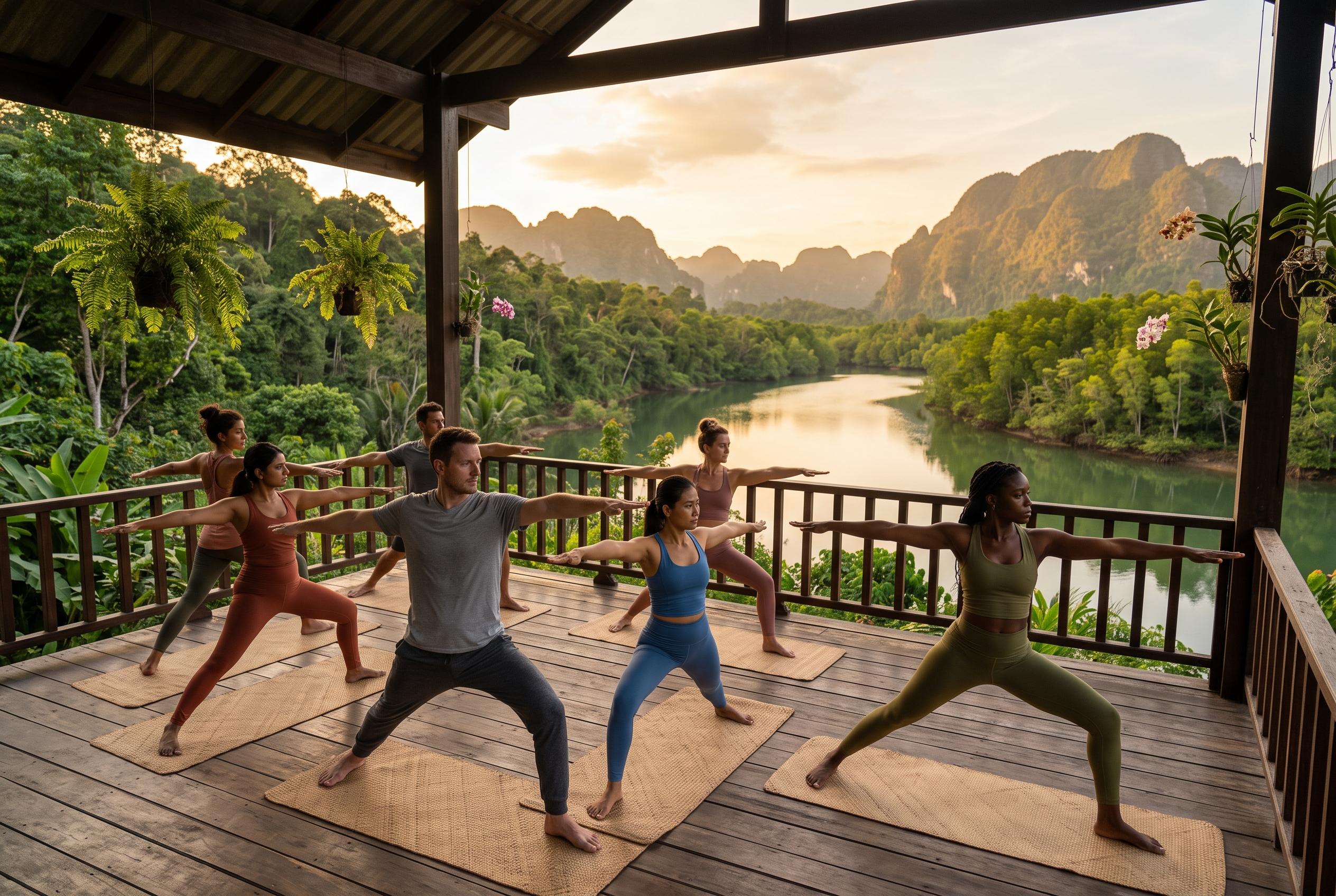
Thailand remains one of the easiest places in Asia to turn a yoga break into a proper reset. The appeal is simple for travellers: beach time, warm weather, good food, and retreat centres that range from budget-friendly to polished luxury. Hostelgeeks’ guide, along with several recent round-ups, shows that the market is broad enough to suit beginners, regular practitioners, and people who want their trip to feel more like a wellness escape than a rigid course.
For many visitors, the main decision is location. Koh Phangan is still the classic choice for a retreat-heavy trip, while Koh Samui leans more towards polished island comforts. Chiang Mai and Pai offer a greener, more inland atmosphere, and Phuket gives easier access plus beachside convenience. Out Thailand’s comparison of the country’s retreat hubs makes clear that the right choice depends less on yoga style alone and more on the setting you want around it.
Among the island options, Koh Phangan comes up repeatedly because it combines a social retreat scene with plenty of well-known centres. Recent guides highlight places such as Island Yoga, Wonderland, and Ananda for travellers who want a mix of yoga, meditation, and downtime without losing the feeling of being on holiday. The common thread is variety: some retreats are built around multi-style classes and community, while others add detox, steam sauna sessions, or more structured wellness programmes.
Koh Samui has a slightly more polished feel, with retreats such as Vikasa often singled out for its clifftop or oceanfront setting and its focus on transformation rather than just classes. Other guides point to Samahita, which is known for structured practice and wellness support, and to centres that pair yoga with beach access, massage, and longer stays. For travellers who want the yoga to be part of a fuller resort experience, this island is hard to beat.
If your idea of a retreat is quieter and more restorative, northern Thailand is worth considering. Guides covering Chiang Mai and Pai describe a different rhythm from the islands: more mountain air, a slower pace, and a stronger sense of local culture. That makes these destinations appealing for people who want a retreat that feels less like a holiday package and more like a change of environment with space to think.
Price remains one of Thailand’s biggest selling points. Hostelgeeks’ guide lists options from roughly $414 upwards, with retreat lengths ranging from a few days to several weeks. Other round-ups suggest a wide spread across the market, which means travellers should look carefully at what is included before booking. Meals, transfers, extra treatments, excursions, and airport pick-up can make a major difference to value, especially if a lower headline price turns out to exclude the basics.
That is why the most useful question is not simply which retreat is best, but which type of trip you actually want. Some retreats are built for beginners who want steady instruction and a calm setting. Others are more ambitious, adding detox, breathwork, massage, or healing workshops. A few, such as the more immersive hill-tribe and nature-based stays featured in Hostelgeeks’ guide, also appeal to travellers looking for cultural exchange alongside yoga.
For travellers choosing where to go in Thailand, the practical takeaway is straightforward. Pick the island if you want beaches and easy retreat variety, choose Chiang Mai or Pai for a more grounded and scenic reset, and read the fine print before paying a deposit. Thailand’s yoga retreat scene is strong because it offers flexibility: you can go simple, indulgent, intensive, or quietly restorative, depending on how much structure you want around your time away.
Source Reference Map
Inspired by headline at: [1]
Sources by paragraph:
- Paragraph 1: [2], [3]
- Paragraph 2: [3]
- Paragraph 3: [2], [4], [6]
- Paragraph 4: [4], [5], [7]
- Paragraph 5: [3], [5]
- Paragraph 6: [1], [2], [3]
- Paragraph 7: [1], [2], [4], [7]
- Paragraph 8: [1], [3]
Source: Noah Wire Services