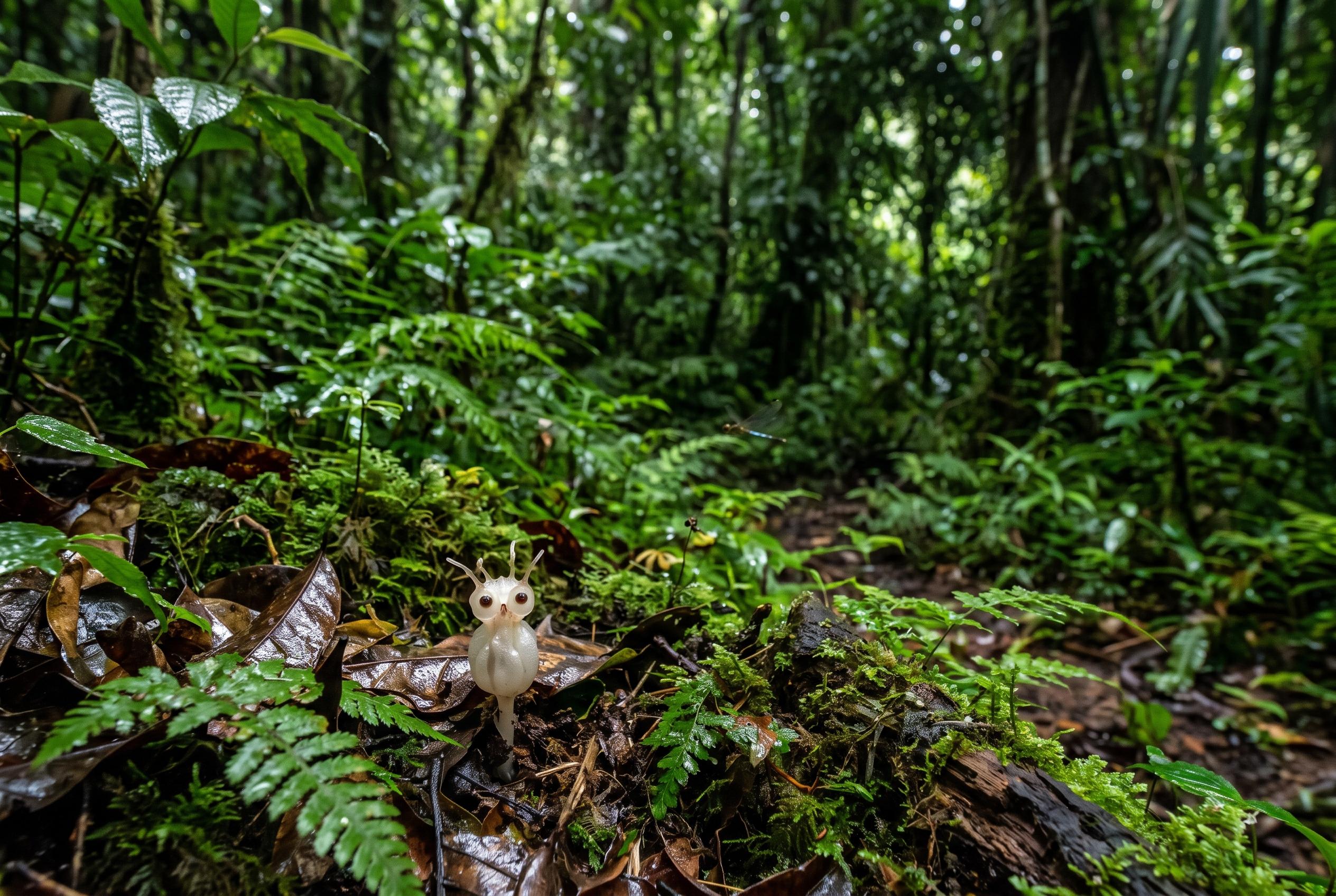
The elusive Thismia thaithongiana, a tiny, owl-eyed plant dependent on fungi, appears briefly in Umphang’s forests, offering a rare opportunity for nature enthusiasts this rainy season.
A rare miniature plant that local guides call Phitsawong Ta Nok Huk, or Phitsawong Thai Thong, has begun appearing in the forests of Umphang district in Tak, offering nature-minded visitors a short seasonal window to spot one of Thailand’s strangest botanical curiosities. The plant, scientifically known as Thismia thaithongiana, was seen during a survey on August 17 with the Tourism Authority of Thailand’s Tak office, the Umphang tourism group and Umphang Wildlife Sanctuary.
It is easy to overlook. The flower is tiny, hugs the forest floor and blends into leaf litter, so finding it usually requires patience and a careful eye. Its nickname comes from its owl-like appearance, while botanists note that it is a mycoheterotrophic species, meaning it depends on fungi in the soil rather than conventional photosynthesis. According to botanical reports, it was first described in the scientific journal Phytotaxa after being found on Doi Hua Mot in Umphang district.
For travellers, the main appeal is timing. The plant emerges in the rainy season and, according to local tourism officials, can typically be seen in Umphang until around October, making late-season visits the best bet for a sighting. Earlier accounts from Thai media said the species has become a recurring draw for botanists and visitors at the end of the wet season, when it briefly flowers in the sanctuary.
Those hoping to see it are being urged to tread lightly and use a phone camera’s zoom rather than stepping off the path or disturbing the plant. That advice matters in a place like Umphang, where the experience depends on the forest remaining intact. The area’s appeal is not just the plant itself, but the chance to combine a rare natural sighting with a trip into one of Tak’s more remote and rewarding forest landscapes.
Source Reference Map
Inspired by headline at: [1]
Sources by paragraph:
Source: Noah Wire Services
Noah Fact Check Pro
The draft above was created using the information available at the time the story first
emerged. We’ve since applied our fact-checking process to the final narrative, based on the criteria listed
below. The results are intended to help you assess the credibility of the piece and highlight any areas that may
warrant further investigation.
Freshness check
Score:
5
Notes:
The article references a survey conducted on August 17, 2026, with the Tourism Authority of Thailand’s Tak office, the Umphang tourism group, and Umphang Wildlife Sanctuary. However, similar reports about the Thismia thaithongiana plant have been published as early as December 12, 2019, and October 2, 2024. ([nationthailand.com](https://www.nationthailand.com/in-focus/30379370/?utm_source=openai)) This suggests that the narrative may be recycled, potentially reducing the freshness score.
Quotes check
Score:
4
Notes:
The article includes direct quotes attributed to local tourism officials urging visitors to tread lightly and use a phone camera’s zoom. However, these quotes cannot be independently verified through available sources, raising concerns about their authenticity. The lack of verifiable quotes diminishes the credibility of the reporting.
Source reliability
Score:
6
Notes:
The article is sourced from The Thaiger, a news outlet that has previously reported on this topic. However, The Thaiger is a niche publication with limited reach, which may affect the reliability of the information presented. Additionally, the article relies on sources that cannot be independently verified, further questioning the overall reliability.
Plausibility check
Score:
7
Notes:
The article describes the Thismia thaithongiana plant, also known as Phitsawong Thai Thong, emerging in the forests of Umphang district in Tak. While this aligns with previous reports from 2019 and 2024, the lack of new, independently verifiable information raises questions about the novelty of the claim. The absence of supporting details from other reputable outlets further diminishes the plausibility of the report.
Overall assessment
Verdict (FAIL, OPEN, PASS): REVIEW
Confidence (LOW, MEDIUM, HIGH): MEDIUM
Summary:
The article presents information about the Thismia thaithongiana plant emerging in Tak's Umphang district. However, similar reports have been published in 2019 and 2024, suggesting potential recycling of content. The inclusion of unverifiable quotes and reliance on sources that cannot be independently confirmed further diminishes the credibility of the report. Given these concerns, a thorough editorial review is recommended before publishing.