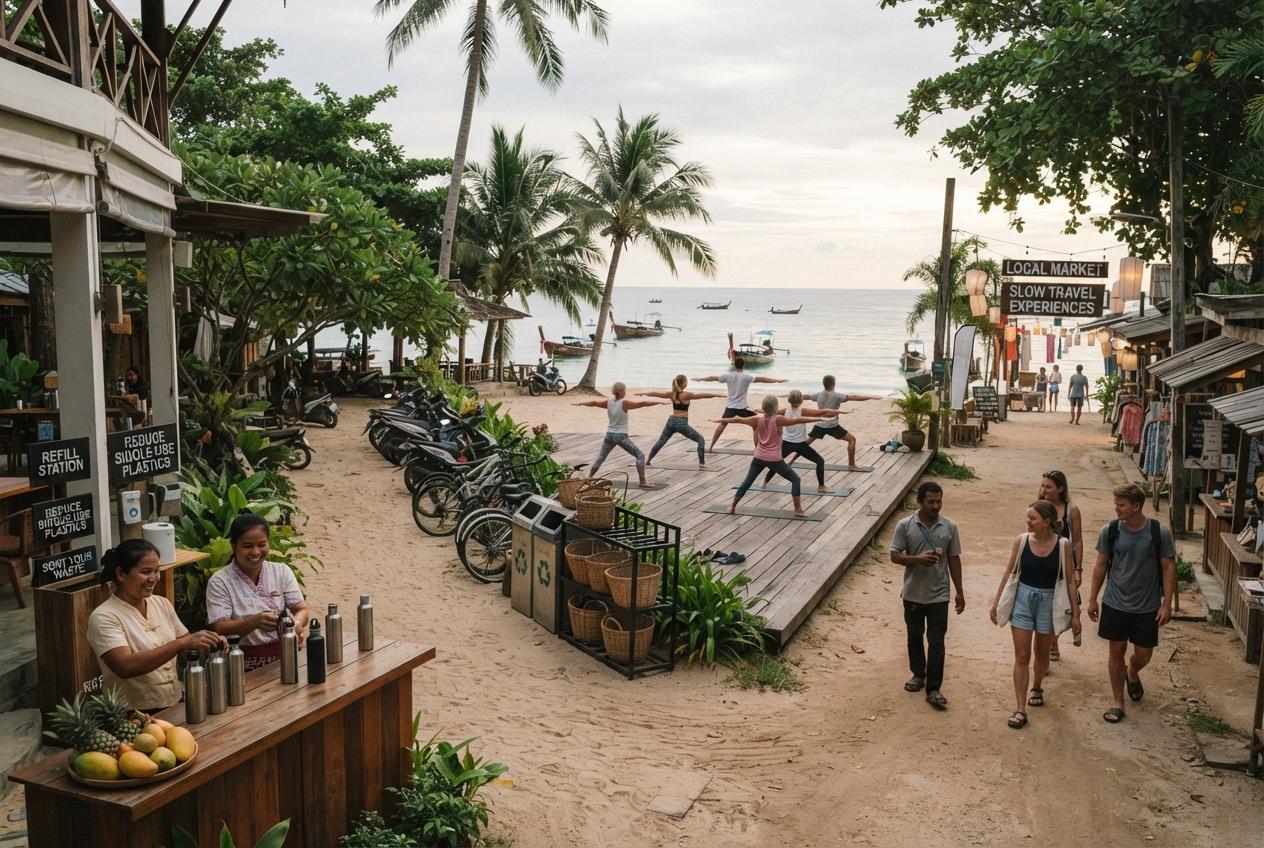
Thailand’s tourism rebound is being led by a clear change in direction: fewer slogans about sheer visitor numbers, more emphasis on spending power, longer stays and better balance. That shift matters for travellers because it is shaping what gets built, promoted and protected. The Tourism Authority of Thailand has been pushing a “value is the new volume” message since 2025, and in 2026 it doubled down with plans centred on higher-quality trips, safety, accessibility, sports, hidden destinations and sustainability. For visitors, that means the country is increasingly being sold not just as an easy beach break, but as a place for wellness, culture, food and slower, more meaningful travel.
The latest official figures underline why the strategy is changing. According to the Ministry of Tourism and Sports, Thailand drew more than 18.5 million foreign arrivals in the first seven months of 2026 and generated about 896 billion baht in tourism income over that period. Nation Thailand reported that the market was still slightly below last year’s pace, but the country remained resilient thanks to stronger flight frequency and summer demand in key source markets. For travellers, the practical takeaway is that Thailand is busy, but still broadly open, well connected and heavily dependent on keeping the visitor experience smooth.
Phuket remains the clearest example of how that new tourism model works on the ground. The island is still the country’s biggest beach draw, but the mix is changing: more long-stay visitors, remote workers and wellness-seekers, alongside the usual holiday crowd. The island’s strong hotel occupancy and rising room rates reflect that premium turn, while its direct air links and yacht-friendly infrastructure keep it ahead of many rivals. For travellers, that means Phuket is increasingly about resort stays, private boat trips, spa breaks and higher-end dining rather than only cheap sun-and-sea packages.
Thailand’s official planning also helps explain what visitors may notice next. The government-backed strategy presented by TAT in 2025 and 2026 placed more weight on trust, cultural identity, sustainability and new customer segments, while a June 2026 update at Thailand Travel Mart Plus highlighted wellness and “healing” travel as a growing luxury theme. A separate February 2026 plan, dubbed Thailand Tourism Next, set an ambitious revenue target of up to three trillion baht. For travellers, this should translate into more curated experiences, more marketing of secondary destinations and a stronger push to spread demand beyond the most crowded hotspots.
The other big change is in Thailand’s outdoor and adventure offering. The Department of National Parks has begun rolling out hiking schools under the “Khon Doen Pa” project, a response to the pressure created by millions of annual park visits, waste and safety concerns. Officials want visitors to follow “Leave No Trace” principles more closely, which may feel more structured than before but should help keep trails, forests and national parks in better shape. For travellers heading north or into protected areas, the upside is simple: better-managed nature tourism should make the experience safer and more sustainable over time.
Even with those gains, Thailand still faces headwinds. Short-haul demand has weakened, and officials have pointed to lower seat capacity from India and concerns in some nearby markets as part of the reason. Long-haul travel has held up better, helped by direct routes and stronger spending patterns. That split matters to visitors because it suggests Thailand is likely to keep prioritising higher-value trips, better transport links and experiences that appeal to people staying longer and spending more. For travellers choosing where to go in Thailand, the message is that the country is still leaning hard on its beach icons, especially Phuket, but it is also trying to make forests, wellness retreats, city breaks and slower itineraries part of the main draw.
Source Reference Map
Inspired by headline at: [1]
Sources by paragraph:
- Paragraph 1: [2], [4]
- Paragraph 2: [5], [6]
- Paragraph 3: [6]
- Paragraph 4: [2], [3], [4]
- Paragraph 5: [2], [4]
- Paragraph 6: [3], [5], [6]
Source: Noah Wire Services