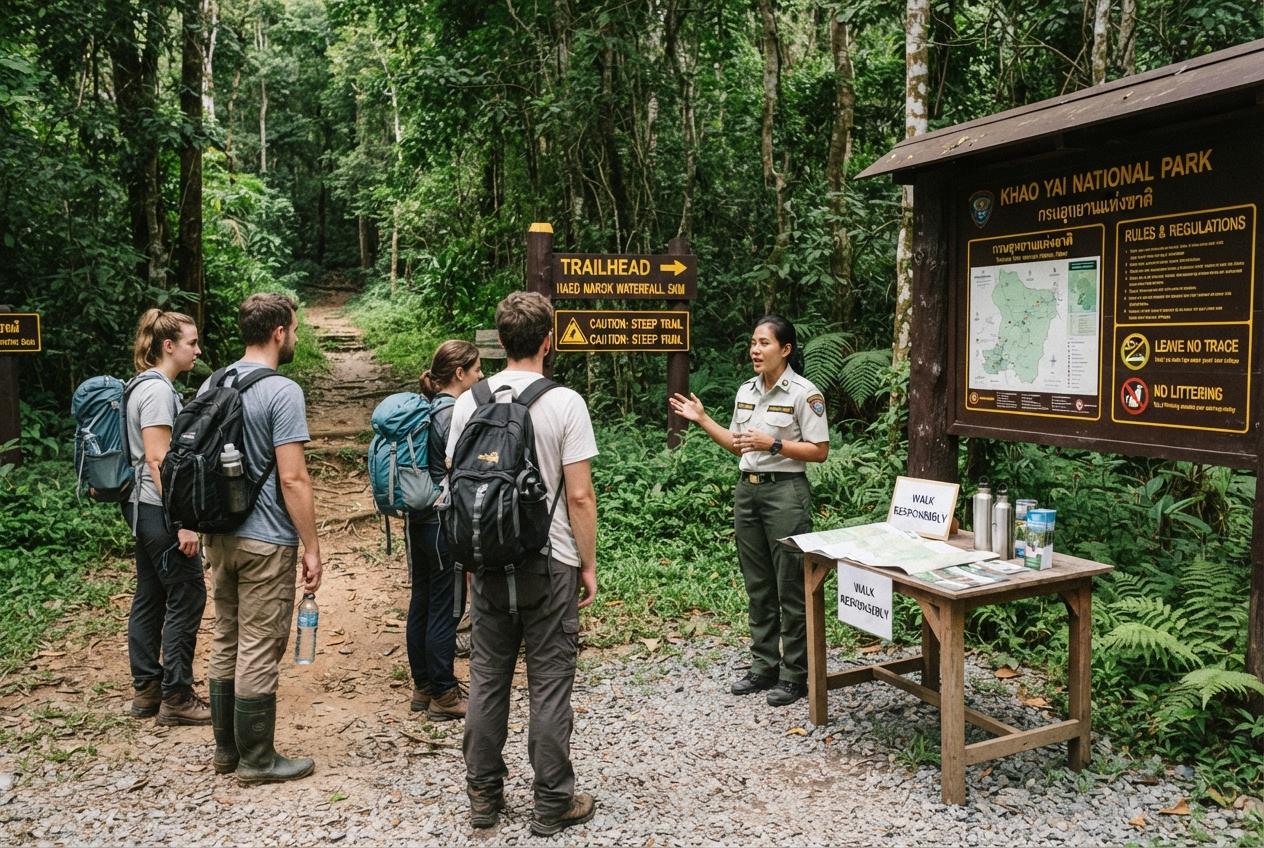
Thailand is launching a new initiative with 10 hiking schools aimed at educating visitors on responsible trail use and reducing environmental impact in its national parks amid rising visitor numbers and ecological concerns.
Thailand is trying to make hiking safer and less damaging as visitor numbers in its national parks continue to climb. According to The Nation, the Department of National Parks, Wildlife and Plant Conservation has launched a new "Khon Doen Pa School" scheme at Khao Yai National Park in Nakhon Ratchasima to teach people how to enter forests responsibly before they set off on the trail.
For travellers, the practical aim is simple: fewer injuries, less litter and a lighter footprint in places that are already under strain. The Department says more than 10 million people visit national parks each year, while protected areas are left with more than 1,000 tonnes of waste annually, alongside accidents and disturbance to wildlife. The new approach is meant to shift education to the front end of the trip, rather than dealing with problems after they happen.
The programme is built around Leave No Trace, a set of outdoor principles that the Wild Planet in Thailand also uses in its adventure courses, alongside guidance such as planning ahead, packing out rubbish and reducing impact on wildlife and fellow hikers. Khao Yai National Park’s own visitor advice similarly stresses quiet behaviour, proper waste handling and not collecting natural materials, underlining how central these habits are becoming to the country’s most popular natural areas.
According to The Nation, 10 schools have been established under the scheme to train "conservation hiking instructors" who can pass on those skills systematically. Natural Resources and Environment Minister Suchart Chomklin said the initiative is intended to link tourism with the protection of forests and wildlife, while the department plans to expand the learning classrooms to more national parks and forest parks across Thailand.
For visitors, that could make the country’s hiking offer more accessible and less intimidating, especially in parks where rules can be unfamiliar and terrain challenging. It may also improve the experience at busy sites such as Khao Yai, where guidance already exists, and at other nature destinations across Thailand, including places like Pang Sida and Phu Pha Thoep, where planning, transport and respect for the environment can make a real difference to a trip.
Source Reference Map
Inspired by headline at: [1]
Sources by paragraph:
Source: Noah Wire Services
Noah Fact Check Pro
The draft above was created using the information available at the time the story first
emerged. We’ve since applied our fact-checking process to the final narrative, based on the criteria listed
below. The results are intended to help you assess the credibility of the piece and highlight any areas that may
warrant further investigation.
Freshness check
Score:
8
Notes:
The article reports on the launch of the 'Khon Doen Pa School' project on July 31, 2026. A search for this event reveals no earlier publications, indicating the news is fresh. However, the Mekong Tourism Coordinating Office (MTCO) is a regional organisation, which may have limited reach and influence. Additionally, the article includes a source reference map, suggesting it may be based on a press release. Press releases typically warrant a high freshness score but may lack independent verification.
Quotes check
Score:
7
Notes:
The article includes direct quotes attributed to officials such as Natural Resources and Environment Minister Suchart Chomklin and director of the National Parks Division Saysudchai Chunchaowarit. A search for these quotes reveals no earlier usage, suggesting they are original. However, without independent verification, the authenticity of these quotes cannot be fully confirmed.
Source reliability
Score:
6
Notes:
The article originates from the Mekong Tourism Coordinating Office (MTCO), a regional organisation. While MTCO is a recognised entity, its publications may not have the same credibility as major news organisations. The presence of a source reference map indicates the article may be based on a press release, which can be informative but may lack independent verification.
Plausibility check
Score:
8
Notes:
The initiative to launch 10 hiking schools for responsible forest tourism aligns with Thailand's ongoing efforts to promote sustainable tourism and environmental conservation. The emphasis on the 'Leave No Trace' principle and the involvement of the Department of National Parks, Wildlife and Plant Conservation (DNP) are consistent with previous initiatives. However, the article's reliance on a single source and the lack of independent verification raise concerns about the completeness and accuracy of the information.
Overall assessment
Verdict (FAIL, OPEN, PASS): REVIEW
Confidence (LOW, MEDIUM, HIGH): MEDIUM
Summary:
The article reports on the launch of the 'Khon Doen Pa School' project in Thailand, aiming to promote responsible forest tourism. While the news is fresh and the initiative aligns with Thailand's environmental conservation efforts, the article's reliance on a single source, potential use of a press release, and lack of independent verification raise concerns about its credibility. The involvement of government-affiliated entities and the absence of independent verification sources further contribute to these concerns.