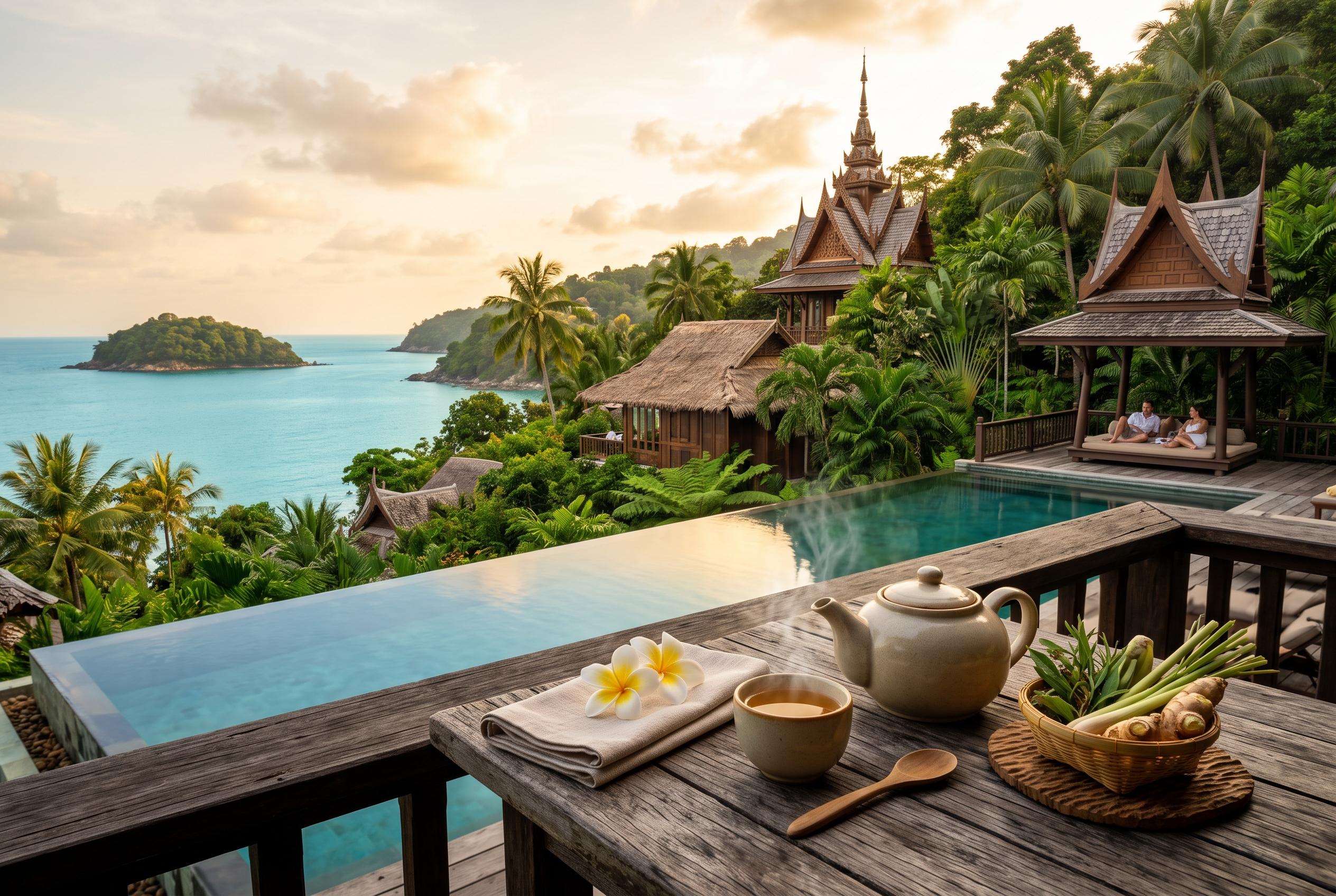
Thailand’s wellness offer is broader than the spa menu at a five-star hotel. On a recent route from Koh Samui to Bangkok, the contrast between a purpose-built retreat and a classic luxury resort showed just how different a restorative break in the country can feel. In the south, Kamalaya presents itself as a wellness sanctuary rather than a hotel, while Banyan Tree Samui leans into the pleasures of a private-pool villa stay without losing sight of calm and privacy. For travellers, that means choosing between immersive self-improvement and polished indulgence, both set against Koh Samui’s tropical coastline.
Kamalaya, on Koh Samui’s quieter southern shore, was built around a cave once used by Buddhist monks for meditation, and that sense of stillness remains central to the guest experience. According to the property, it combines Eastern healing traditions with Western medical research, with programmes aimed at anything from detox and stress recovery to meditation, sleep and cognitive health. Accommodation is arranged in suites, villas and rooms that are designed to sit lightly within the landscape, making it a strong choice for travellers who want their stay to feel structured, restorative and quietly secluded.
Banyan Tree Samui offers a different kind of escape. The resort sits on a private hill above Lamai Bay and has 88 all-pool villas, each with its own infinity pool, plus views over the Gulf of Thailand. Its appeal is less about a formal retreat programme and more about space, seclusion and the luxury of staying in a villa that opens directly onto the island landscape. For visitors who want beach access, privacy and a softer wellness angle, it is a more traditional holiday base with a strong spa offering and locally inspired touches.
That distinction matters because Thailand’s wellness culture is not limited to treatment rooms. The country’s broader spa and wellness market is large, and Bangkok in particular acts as a gateway to experiences that range from high-end hotel spas to temple visits and garden-based escapes. In the city, the calmer corners can be the most memorable: riverside greenery, rooftop gardens and historic temples such as Wat Pho, long associated with traditional Thai massage, all add depth to a trip that might otherwise be defined by traffic and noise.
For travellers who want something more hands-on, Bangkok also offers more grounded forms of wellbeing. Poomjai Garden, a family-run property outside the centre, has been turned from a former lychee farm into a permaculture garden with herbs, plants and a small café, giving visitors a chance to cook, wander and slow down away from the city’s pace. It is a useful reminder that wellness in Thailand can be as much about food, gardens and time outdoors as it is about massage and meditation.
Taken together, these places show why Thailand works so well for wellness-focused travel. Kamalaya suits guests seeking a guided reset in a deeply tranquil setting; Banyan Tree Samui is better for those who want luxury, seclusion and sea views with a spa element; and Bangkok can round out the journey with culture, temples and green spaces that restore in a different way. For travellers planning a stay, the best choice depends on whether the priority is formal wellness, coastal comfort or a mix of both.
Source Reference Map
Inspired by headline at: [1]
Sources by paragraph:
- Paragraph 1: [2], [3]
- Paragraph 2: [2], [4], [6]
- Paragraph 3: [3], [5]
- Paragraph 4: [1]
- Paragraph 5: [1]
- Paragraph 6: [1], [2], [3], [4]
Source: Noah Wire Services