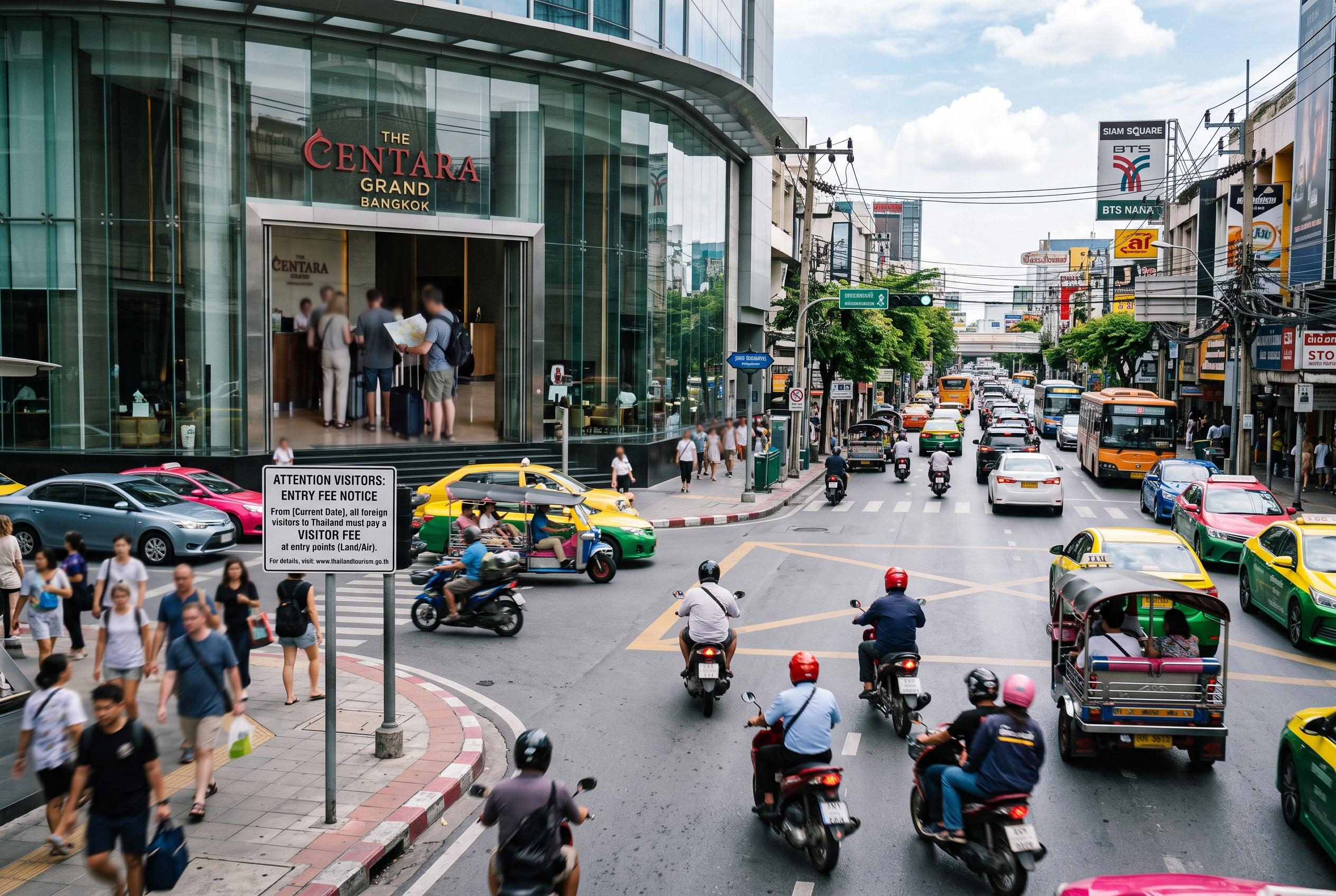
Thailand is exploring the introduction of a tourist levy, joining a growing trend among countries like Japan, New Zealand, Bali, Bhutan, and Maldives, which are integrating visitor charges into the travel experience to fund infrastructure and conservation efforts.
Thailand is emerging as the latest destination to weigh a tourist levy, joining a growing group of countries that are asking visitors to help pay for the strain and cost of popular travel markets. For holidaymakers, the practical message is simple: this is less about a dramatic new tax shock and more about another small charge that could be folded into your overall trip budget, much like departure taxes, visa-linked levies or accommodation add-ons already used elsewhere.
Japan offers one of the clearest comparisons. According to the Japan Times and Japan’s official tourism information, the country raised its international tourist tax from ¥1,000 to ¥3,000 from 1 July 2026, with the fee collected as part of airline and cruise ticket pricing rather than at the airport. The aim, the authorities say, is to help address overcrowding and support tourism infrastructure. For travellers, that means the extra cost is easy to miss unless it is checked before booking.
New Zealand has taken a different route by building its levy into the entry process. The Ministry of Business, Innovation and Employment says the International Visitor Conservation and Tourism Levy was increased to NZ$100 in October 2024, with the money intended to support tourism facilities and conservation. Immigration New Zealand says most visitors pay it when applying for a visa or NZeTA, making it a useful reminder that Thailand’s proposed charge, if introduced, may be handled in a similarly practical way rather than as a separate payment on arrival.
Elsewhere in the region, Bali shows how a destination can target visitors directly without applying a nationwide model. The island’s official Love Bali platform says international tourists must pay a one-off IDR 150,000 levy, introduced in February 2024, to support cultural and environmental protection. Bhutan, by contrast, uses a far steeper Sustainable Development Fee of US$100 a night, underscoring that tourism charges can be designed either as a modest administrative fee or as part of a broader strategy to limit volume and fund sustainability.
The Maldives provides another example of how visitor charges can be embedded into the holiday experience. Its Green Tax is applied through tourist accommodation, according to the Maldives Inland Revenue Authority, and government revenue figures show it remains a meaningful source of income. For travellers, the takeaway is not that Thailand will necessarily copy any one of these systems, but that visitor levies are becoming normal across major destinations. If Thailand finalises its proposal, the details that matter most will be when it is collected, who pays it and whether it is added at booking, arrival or departure.
Source Reference Map
Inspired by headline at: [1]
Sources by paragraph:
Source: Noah Wire Services
Noah Fact Check Pro
The draft above was created using the information available at the time the story first
emerged. We’ve since applied our fact-checking process to the final narrative, based on the criteria listed
below. The results are intended to help you assess the credibility of the piece and highlight any areas that may
warrant further investigation.
Freshness check
Score:
6
Notes:
The concept of Thailand implementing a tourist levy has been previously discussed, with similar proposals and discussions dating back to 2025. For instance, a video titled 'Thailand Entry Tax Pushed To 2026: Here's The Real Deal!' was published on 10 October 2025, discussing the delay of the 300 baht entry fee to 2026. ([youtube.com](https://www.youtube.com/watch?v=dAbd0S8z7CI&utm_source=openai)) Additionally, a press release from the Ministry of Foreign Affairs of Thailand, dated 31 October 2023, announced a visa exemption scheme for tourists from India and Taiwan, effective from 10 November 2023 to 10 May 2024. ([image.mfa.go.th](https://image.mfa.go.th/mfa/0/rdX909e54m/Press_Release_-_visa_exemption_%28en%29.pdf?utm_source=openai)) These instances suggest that the narrative may not be entirely fresh. However, without access to the full content of the article, it's challenging to determine if the current piece is a direct republishing or a new analysis. Therefore, the freshness score is moderate.
Quotes check
Score:
5
Notes:
The article includes direct quotes from various sources, such as the Japan Times and the Ministry of Business, Innovation and Employment. However, without access to the full content of the article, it's difficult to verify the authenticity and originality of these quotes. If these quotes are identical to those used in earlier publications, it could indicate reused content. The lack of accessible sources for direct verification raises concerns about the credibility of the quotes. Therefore, the quotes check score is moderate.
Source reliability
Score:
6
Notes:
The article references reputable sources, including the Japan Times and the Ministry of Business, Innovation and Employment. However, the primary source of the article, Travel and Tour World, is a niche publication with limited reach and may not be as widely recognized for its journalistic standards. Additionally, the article includes a YouTube video from a content creator named Pavel Born, which may not be considered a reliable news source. The reliance on a niche publication and a YouTube video raises concerns about the overall reliability of the sources. Therefore, the source reliability score is moderate.
Plausibility check
Score:
7
Notes:
The article discusses Thailand's proposed tourist levy in the context of similar measures implemented by other countries, such as Japan, New Zealand, Bali, Bhutan, and the Maldives. These comparisons are plausible and provide a reasonable basis for the discussion. However, without access to the full content of the article, it's challenging to assess the depth of analysis and the accuracy of the comparisons. Therefore, the plausibility score is moderate to high.
Overall assessment
Verdict (FAIL, OPEN, PASS): REVIEW
Confidence (LOW, MEDIUM, HIGH): MEDIUM
Summary:
The article discusses Thailand's proposed tourist levy, referencing various international examples. However, concerns exist regarding the freshness and originality of the content, the reliability and independence of the sources, and the ability to verify the quotes used. Without access to the full content of the article, it's challenging to fully assess these aspects. Therefore, a REVIEW verdict is recommended, with a medium level of confidence.