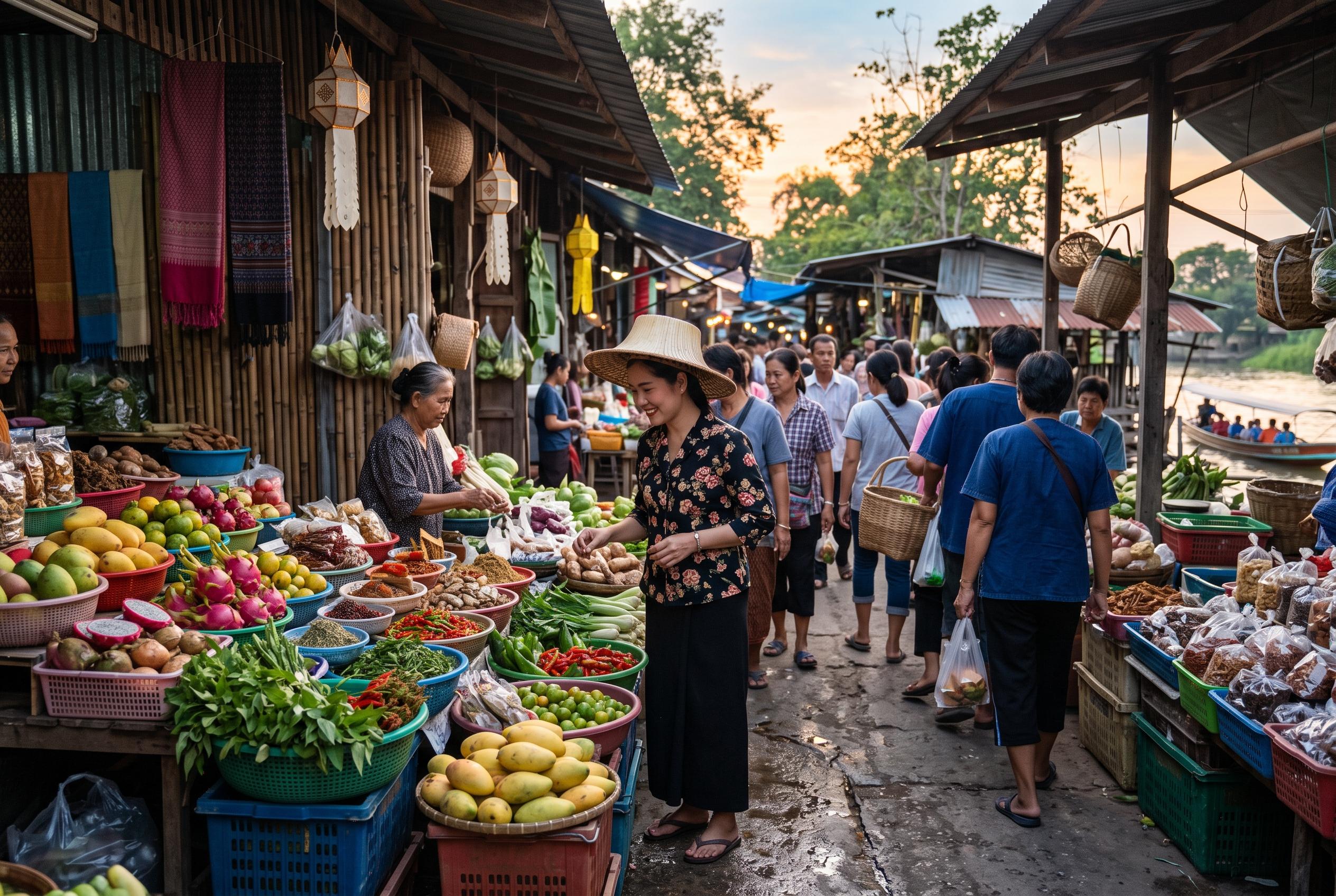
Thailand remains one of the easiest countries in Asia to build a varied trip around, which is why so many first-time visitors end up planning a return before they leave. According to Rough Guides and other travel round-ups, the appeal lies in the contrast: a trip can move from Bangkok’s temple-lined streets and late-night food stalls to quiet northern hills, ancient ruins and beach islands in a matter of days. For travellers, that means Thailand works just as well for a short city break as it does for a longer, multi-stop holiday.
Bangkok is still the place where many journeys begin, and it rewards curiosity more than a fixed checklist. The Grand Palace and Wat Arun remain the city’s signature sights, while Chinatown comes alive after dark with some of the country’s most memorable street food. Rough Guides also points to Chatuchak Weekend Market as a classic stop for shopping and snacking, and the wider city offers enough rooftop bars, canals and backstreet cafés to fill several days without repetition.
North of the capital, Chiang Mai offers a slower pace and a very different atmosphere. Travel guides consistently highlight its old temples, craft markets and access to elephant sanctuaries, along with day trips into surrounding countryside and national parks. For many visitors, that mix of heritage and nature is what makes northern Thailand so appealing: it is one of the best places in the country for cooking classes, relaxed wandering and a break from the pace of Bangkok.
Thailand’s islands and southern coastline provide the most obvious postcard scenery, but the region is not one-size-fits-all. Phuket is the best known gateway, with beaches, nightlife and easy access to boat trips around nearby waters. Krabi and Railay are better for dramatic limestone scenery and a more laid-back feel, while Koh Samui suits travellers who want a blend of resort comfort, beaches and easier downtime. Lonely Planet also singles out Phang Nga Bay for island-hopping, showing how much of the south is best explored by boat rather than by road.
For travellers who want more than beaches, Thailand’s history is a major part of the draw. Ayutthaya, once a royal capital, is now one of the country’s most rewarding day trips from Bangkok, with ruins that give a clear sense of the kingdom’s past. Rough Guides also recommends Sukhothai for visitors who want to see another important historical site, while other guides point to Chiang Rai’s White Temple as an eye-catching stop for those heading further north. These places work best for travellers who want to balance the country’s modern energy with something more reflective.
Food is another reason Thailand stays high on many travel wish lists. Bangkok’s night markets and Chinatown are especially strong for street-side eating, but regional dishes make the case for travelling beyond the capital. Northern Thailand is known for khao soi, while the south leans more heavily towards seafood and punchier curries. For visitors, that means mealtimes are not just a practical part of the day but a core part of the trip, and one of the easiest ways to notice how much the country changes from region to region.
The most practical way to see Thailand is to keep the itinerary focused. Bon Voyage Thailand suggests ten to 14 days as a sensible first trip, ideally covering three or four destinations rather than trying to fit in everything at once. It also says the most comfortable weather is usually from November to February, when much of the country is cooler and drier. For travellers, that combination of easy transport, strong domestic flight links and clear regional variety is what makes Thailand so accessible: it is a country where beaches, temples, food and history can all sit on the same trip without feeling rushed.
Source Reference Map
Inspired by headline at: [1]
Sources by paragraph:
- Paragraph 1: [3], [6]
- Paragraph 2: [2], [6], [7]
- Paragraph 3: [3], [4], [5]
- Paragraph 4: [3], [4], [7]
- Paragraph 5: [3], [7]
- Paragraph 6: [2], [5], [6]
- Paragraph 7: [4], [5], [6]
Source: Noah Wire Services