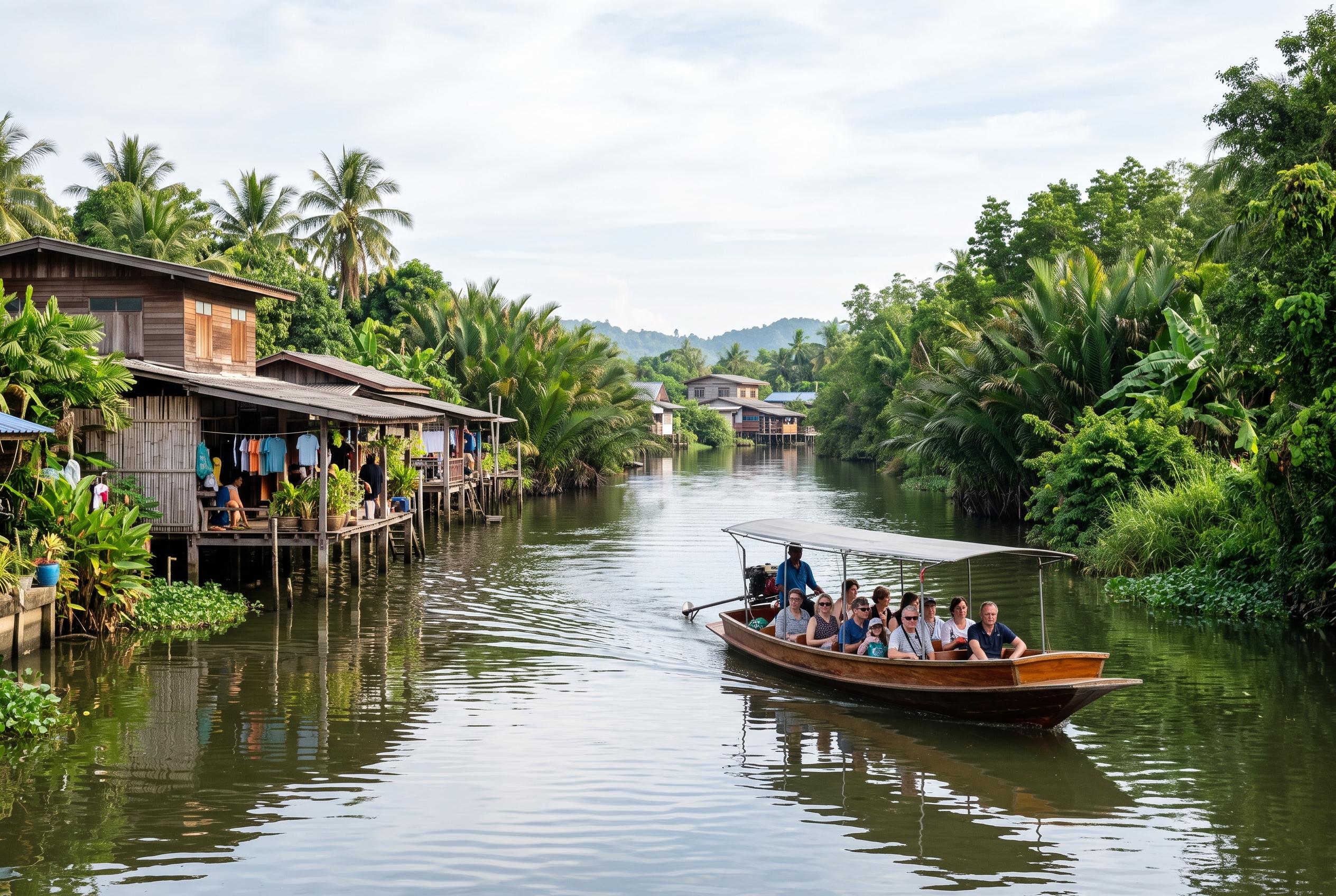
Thailand’s rivers are being recast as short, bookable experiences rather than long-form cruises, giving visitors a quicker way to reach markets, temples, orchards and working waterfronts outside the country’s best-known tourist corridors. The idea fits a broader shift towards higher-value, experience-led travel, as Thailand aims to spread spending more widely and make its waterways useful as connectors between communities rather than simply scenic backdrops.
The timing is telling. According to the figures cited in the Travel and Tour World report, Thailand welcomed 32.97 million international visitors in 2025 and logged about 202 million domestic trips, with tourism revenue reaching roughly THB2.7 trillion. That backdrop helps explain why operators and destination planners are looking at shorter river itineraries that can appeal both to overseas visitors and to Thais seeking easy weekend escapes.
One of the strongest examples is the Mae Klong corridor in western Thailand, where a single outing can link Amphawa, Tha Kha and surrounding canal communities. For travellers, the appeal is practical as much as picturesque: boat rides here can combine food, produce, coconut sugar, orchards and market life without requiring a full day on the water. In Samut Songkhram, where riverside agriculture remains part of everyday life, the experience feels less staged than a standard sightseeing cruise and more like a guided glimpse of how local commerce still works.
A different version of the same idea emerges on the Tha Chin River, where fishing, salt production, estuary landscapes and temple visits create a more working-class, less postcard-friendly experience. That makes the route particularly attractive for repeat visitors who have already seen Bangkok’s main sights and want something more rooted in daily life. Rather than focusing on monuments, the value lies in seeing how rivers continue to shape trade, food and settlement along central Thailand’s waterways.
Further north, the Mae Ping and the Nan offer quieter, landscape-led alternatives. In Tak, the Mae Ping can be used for short excursions that pair river views with rural scenery and historic communities, while Phitsanulok and Nan lend themselves to heritage-heavy journeys built around temples, local culture and slower travel. These are not cruises in the traditional sense; they are compact route experiences that allow travellers to link boat travel with walking visits, food stops and overnight stays.
That flexibility is part of the broader appeal. Thailand’s tourism authorities have been pushing sustainable and community-based products, including secondary-city routes and green travel options, and the river micro-route model sits comfortably within that direction. The success of Vijit Chao Phraya 2025, which drew more than 1.7 million visits according to the Tourism Authority of Thailand, showed how strongly short, focused river experiences can draw crowds when they are tied to culture, lighting and evening outings.
For travellers, the practical takeaway is straightforward: these routes are best approached as short add-ons rather than fixed, one-size-fits-all cruises. Departure points may be small, schedules may be seasonal and some trips may be community-run or private. Anyone planning a visit should check the pier, operating hours, weather conditions and return transport in advance. Done well, the format offers a simple but appealing promise: a few hours on the water, and a clearer sense of Thailand beyond the usual tourist trail.
Source Reference Map
Inspired by headline at: [1]
Sources by paragraph:
- Paragraph 1: [2], [3]
- Paragraph 2: [2], [3]
- Paragraph 3: [2]
- Paragraph 4: [2]
- Paragraph 5: [2], [5]
- Paragraph 6: [4], [5]
- Paragraph 7: [2], [3]
Source: Noah Wire Services