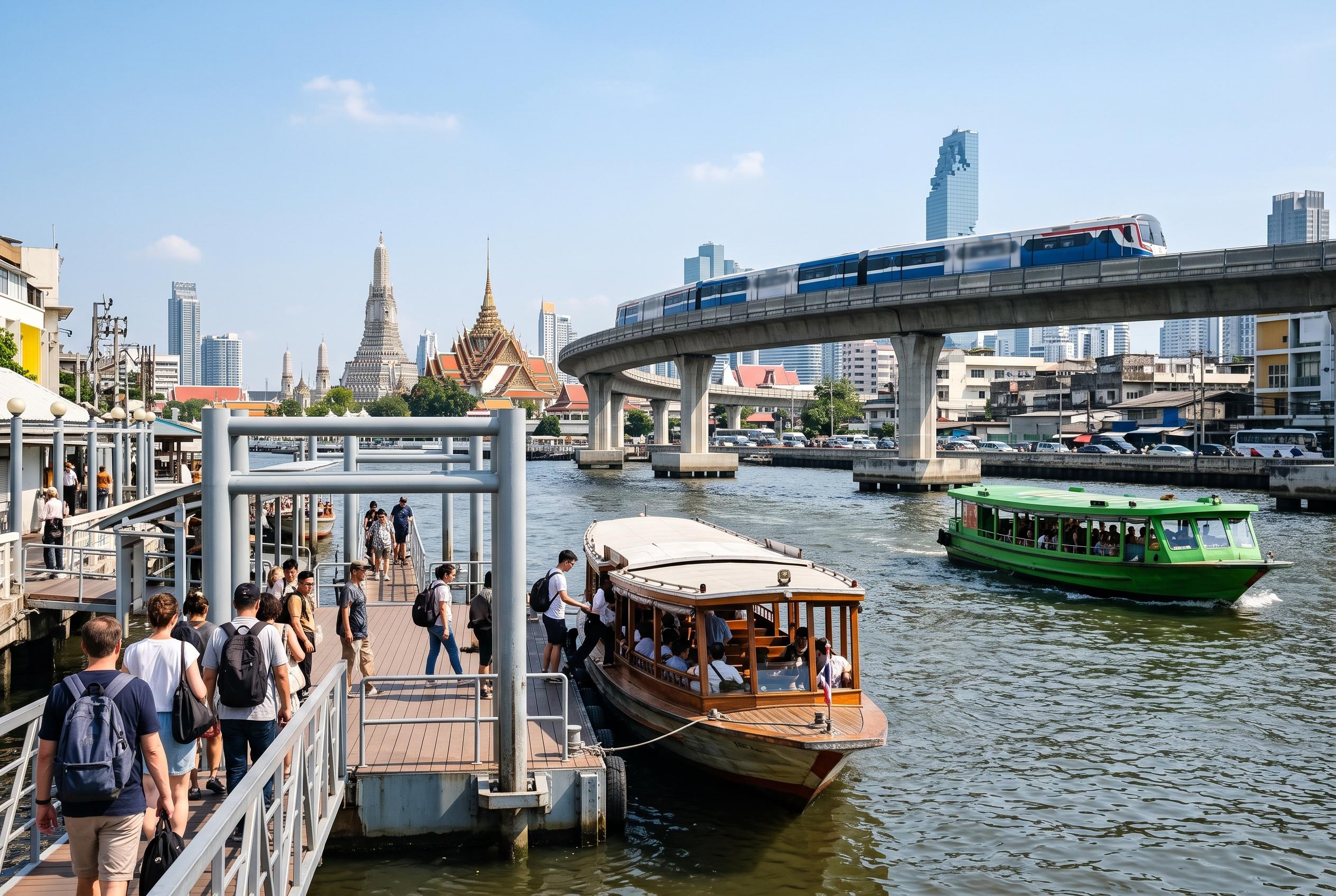
A low-carbon day in Bangkok works best when it follows one transport spine rather than zig-zagging across the city. For travellers, that usually means building the itinerary around a single BTS or MRT corridor, then adding a river link or short walk where it makes sense. Bangkok’s rail network is widely described as the most efficient default for visitors, while river services can help tie together the Old City and riverside sights without relying on cars.
The practical advantage is simple: fewer transfers, less time stuck in traffic and a much easier day in heat or rain. Bangkok travel guides consistently note that the BTS and MRT are the fastest ways to cover central distances, while boats are useful for reaching riverside and historic areas. That makes a rail-and-river plan especially useful for a one-day visitor who wants to see several landmarks without turning the trip into a taxi circuit.
A sensible route starts from the hotel and ends with the evening stop already chosen, rather than treating the day as a loose collection of attractions. If the sights fall along one line, stay on that line and keep walking to the local area around each station. If the day crosses the Chao Phraya, use a pier connection where it is practical and keep an eye on service conditions, because river links can be a better fit than road travel for the historic core.
Weather matters more than many first-time visitors expect. Bangkok’s heat and sudden rain can make long walks uncomfortable, so it helps to have an indoor fallback near every major stop, such as a mall, museum or station-linked attraction. Travel guidance for the city also suggests matching the mode to the journey: BTS or MRT for central cross-town hops, and boat-plus-walk combinations for the riverside or old quarter.
Payment is another detail worth checking before you set off. Bangkok’s rail and ferry systems do not always use the same fare media, and some electric river services now offer cashless options and day passes, including the Thai Go Day Pass for the operator’s public routes. That can make the day smoother if you expect multiple boat hops, but it is still wise to carry small cash as a back-up.
For travellers, the best version of a low-carbon Bangkok day is not the most ambitious one, but the one that survives real-world conditions. Check operating hours on the day, keep transfer time in reserve, and be ready to swap an exposed stop for something rail-linked if the weather turns. Bangkok rewards a route that is compact, flexible and honest about what can be reached comfortably in one day.
Source Reference Map
Inspired by headline at: [1]
Sources by paragraph:
- Paragraph 1: [2], [5]
- Paragraph 2: [4], [7]
- Paragraph 3: [2], [5]
- Paragraph 4: [4], [6]
- Paragraph 5: [3], [5], [7]
- Paragraph 6: [2], [4], [6]
Source: Noah Wire Services