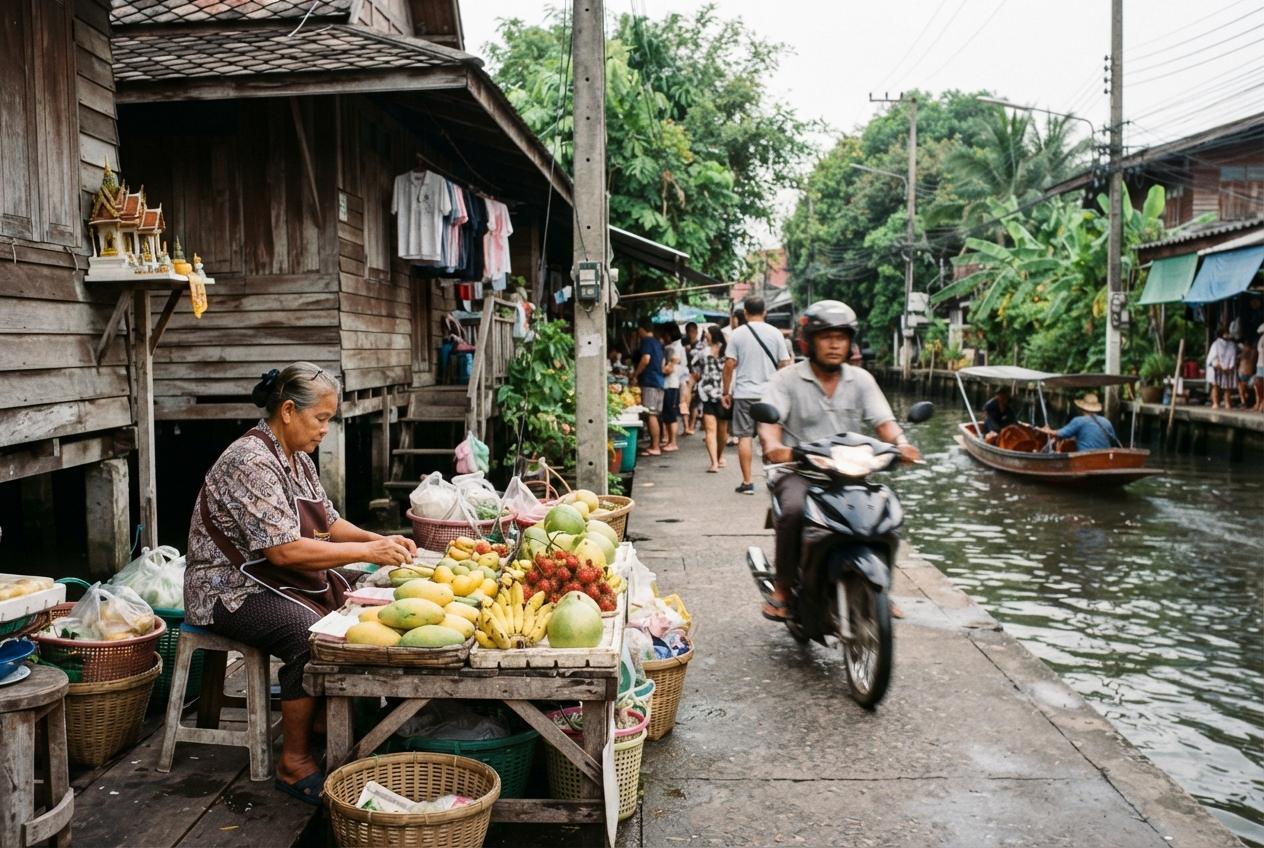
Bangkok rewards travellers who arrive with a plan but stay open to detours. The city’s essentials are well known: the Grand Palace, Wat Arun, Wat Pho, Chinatown, river boats and late-night street food. Yet the real appeal lies in how these experiences fit together. According to the official Grand Palace website, the complex has been the ceremonial heart of the Thai monarchy since 1782, while Wat Arun, on the opposite bank of the Chao Phraya, remains one of the city’s most distinctive riverfront sights. For first-time visitors, that contrast is a good way to think about Bangkok: not as a checklist, but as a city best explored by neighbourhood, by hour and by appetite.
If you only have time for one historic stop, make it the Grand Palace. The official site says it opens daily from 8:30am to 3:30pm, with a 500-baht entrance fee for foreign visitors that includes Wat Phra Kaew and the Queen Sirikit Museum of Textiles. Dress codes are enforced, so shoulders and knees should be covered, and the visit is better early in the day before the heat builds and the courtyards fill. The palace is still used for royal ceremonies, which gives the place a formal atmosphere that travellers feel immediately on arrival.
Wat Pho deserves more than a quick stop for the reclining Buddha. It is one of the city’s most atmospheric temple complexes, and its quieter corners reward slower walking: tiled courtyards, murals, smaller shrines and the kind of details that are easy to miss if you rush through. For visitors building a Bangkok itinerary, it works best as part of a morning devoted to the old city, before crossing the river to the next essential stop.
Wat Arun is Bangkok’s most photogenic river landmark, especially when seen from the far bank rather than from the temple grounds themselves. The official site describes its central prang, decorated with porcelain and seashells, and its position on the western bank of the Chao Phraya makes it ideal for late-afternoon views and sunset light. If you are staying nearby or moving around the historic centre, the temple is easy to combine with a river walk, dinner by the water or a boat trip. Travellers heading there by public transport can take the BTS to Saphan Taksin, continue by Chao Phraya Express Boat to Tha Tien Pier and then cross by ferry, a route the temple’s own directions recommend.
The Chao Phraya itself is part of the experience, not just a way to get around. For travellers, a boat ride offers a different view of the city’s mix of temples, hotels, old wooden homes and busy river traffic. It is also a practical break from Bangkok’s road congestion, especially if you are trying to connect the old town, riverside landmarks and neighbourhoods on both banks in one day.
For somewhere to stay, the riverside remains one of the most useful choices for first-time visitors. Hotel Riva Arun Bangkok, for example, is positioned for views of Wat Arun, Wat Pho and the Grand Palace, which shows why the area works so well for travellers who want easier access to the city’s historic core rather than a generic business-district base. Staying near the river can save time, cut down on traffic stress and make evening sightseeing far more appealing.
Beyond the temples, Bangkok’s character comes through most clearly in Chinatown, Talat Noi and the older canal-linked streets around them. These are the places where food, commerce, worship and everyday life sit close together, often on the same block. For travellers choosing between Thailand’s destinations, this is one of Bangkok’s strongest arguments: few cities in the region combine so much street-level energy with so much historical layering in such a walkable area.
The best time to visit is still the cooler season if comfort is your priority, but Bangkok can be especially rewarding in the rainy months too. Wet pavements sharpen reflections, the light softens and the city’s food stalls and river scenes take on a more vivid, lived-in look. For many visitors, that atmosphere matters more than perfect weather.
Bangkok also works well as a place to slow down rather than race through. A good first trip does not need every famous market or landmark crammed into one day. It needs a sensible pairing of the old city, the river, one evening in Chinatown and at least one loose afternoon for wandering. That balance is what turns Bangkok from a transit stop into a destination worth returning to.
Source Reference Map
Inspired by headline at: [1]
Sources by paragraph:
- Paragraph 1: [2], [3]
- Paragraph 2: [2], [7]
- Paragraph 3: [2]
- Paragraph 4: [3], [4]
- Paragraph 5: [3], [4]
- Paragraph 6: [5]
- Paragraph 7: [2]
- Paragraph 8: [2]
- Paragraph 9: [2], [3]
Source: Noah Wire Services